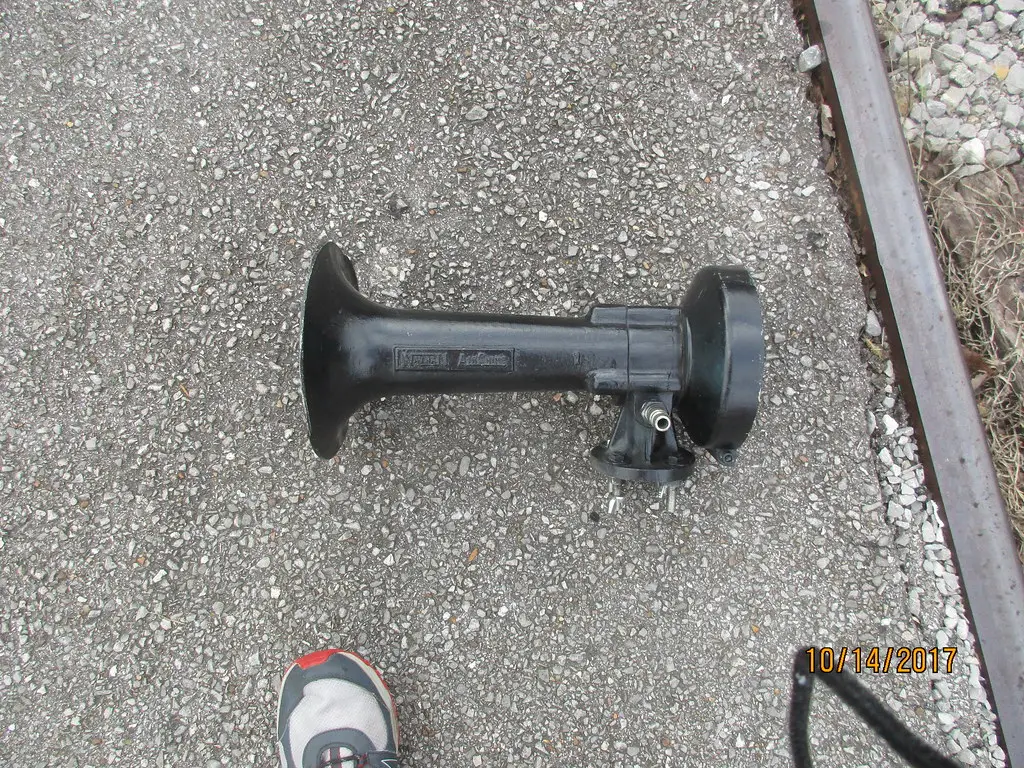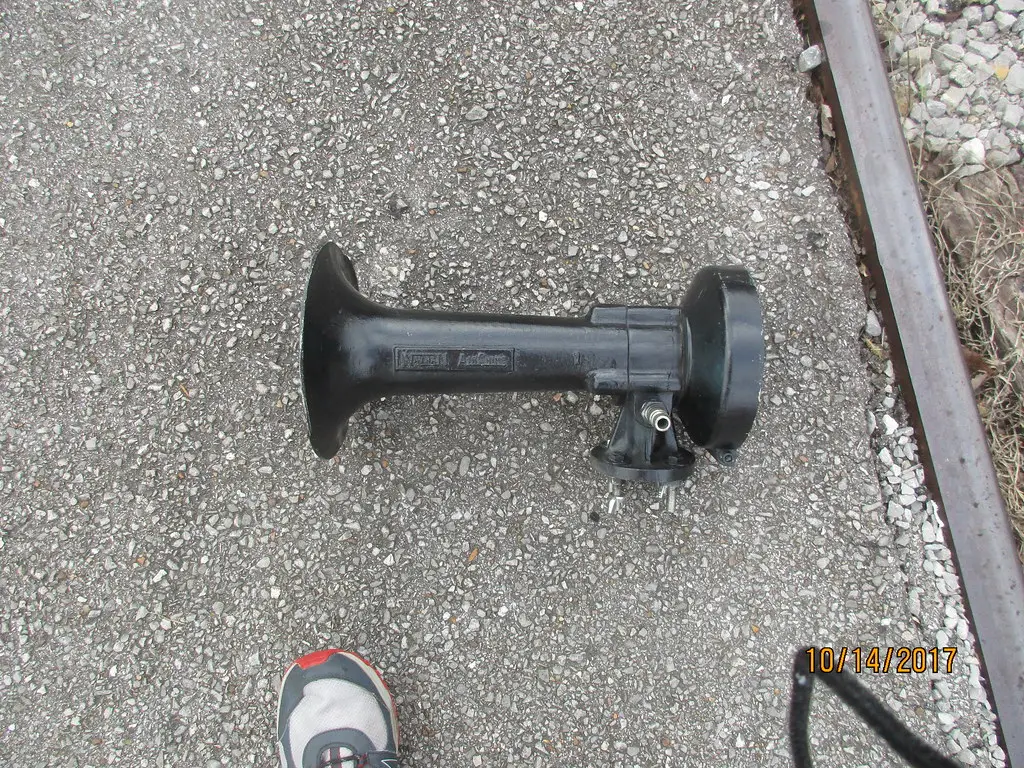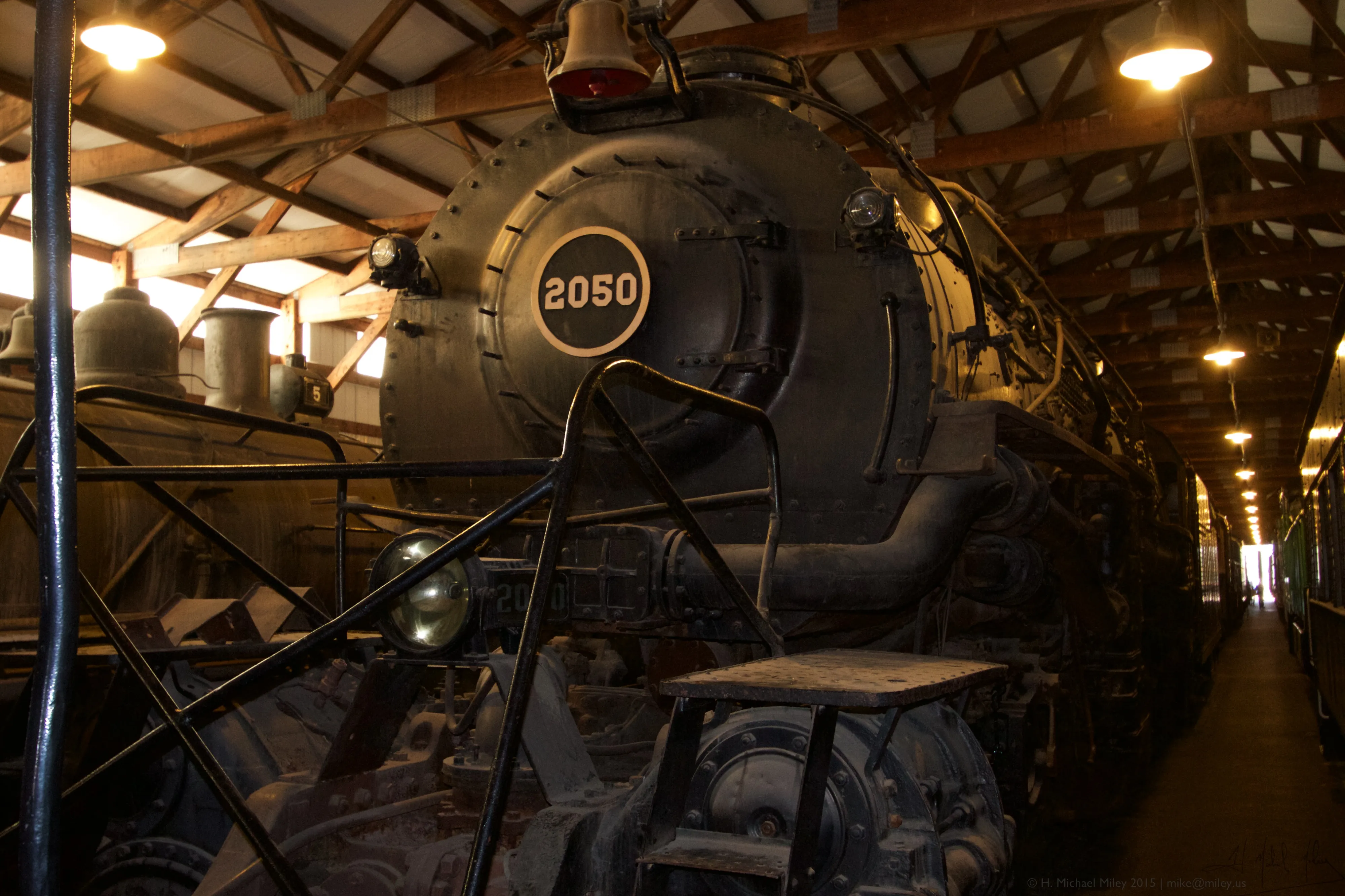
- +Genuine Nathan AirChime locomotive horn — the same OEM that supplies 90%+ of U.S. railroad horns
- +Distinctive A dominant 7th "President's whistle" chord, warmer and more old-school than the modern K5LA
- +Heavy-duty sand-cast aluminum with stainless-steel diaphragms that resist rust and rebuild easily
- +Shared-diaphragm P-series design is documented as easier to service than separate-diaphragm Nathan designs
- +5-year manufacturer defect warranty on the horn
- −Horn alone runs about $2,000; the packaged 544K complete kit is about $2,800
- −30 lb cast-aluminum body needs frame-grade mounting, not a bumper bracket
- −Air-hungry: a 5-chime manifold wants a 5-gallon tank and a strong compressor for usable blast length
- −Nathan publishes no consumer dB or PSI spec — the 149 dB figure is a retailer claim with no stated distance
- −Far exceeds every street-legal horn limit — realistically off-road / property use only
Methodology
This review aggregates publicly available information from manufacturer specifications, retailer listings, and verified user reviews. We do not perform hands-on testing. For the Nathan AirChime P5 we drew on Nathan AirChime’s own manufacturer site, HornBlasters’ standalone-horn product listing, Amazon and specialty-retailer listings for price and decibel cross-checks, and Wikipedia’s Nathan Manufacturing entry for the chord and model history. Where a number comes from a retailer rather than the manufacturer, we say so. Last reviewed: August 12, 2026.
Quick verdict
The Nathan AirChime P5 is a real, OEM-grade locomotive horn — not a stamped-trumpet truck horn dressed up with a “train horn” label. It plays the older A dominant 7th “President’s whistle” chord that predates the now-ubiquitous K5LA, and it is built from heavy sand-cast aluminum with stainless diaphragms. It is also expensive, heavy, and demanding of its air system, and Nathan publishes no consumer-facing decibel or pressure spec. In editorial opinion it earns 4.4/5 — a genuinely special horn for the builder who specifically wants the vintage Nathan chord and has the platform to feed it.
What it is
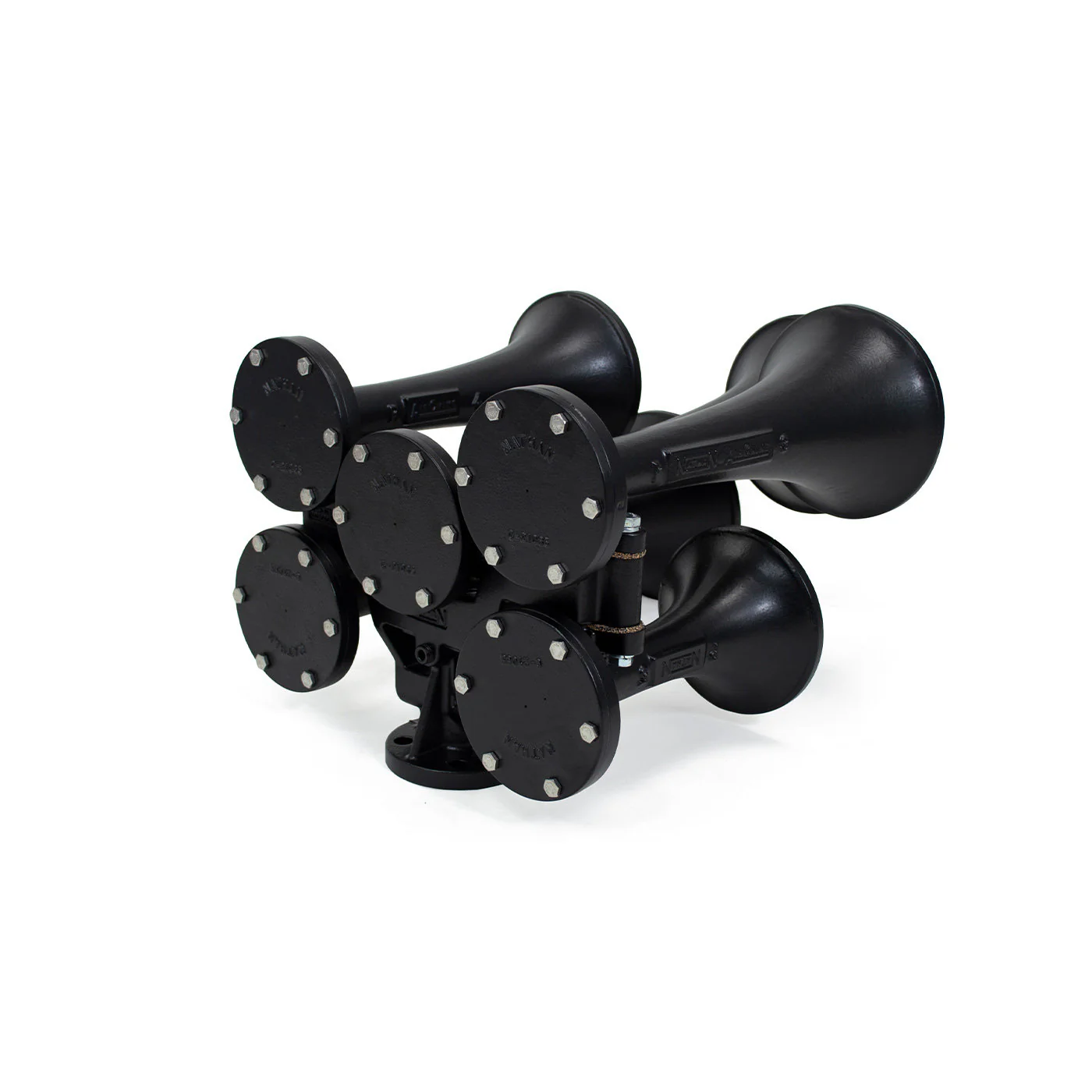
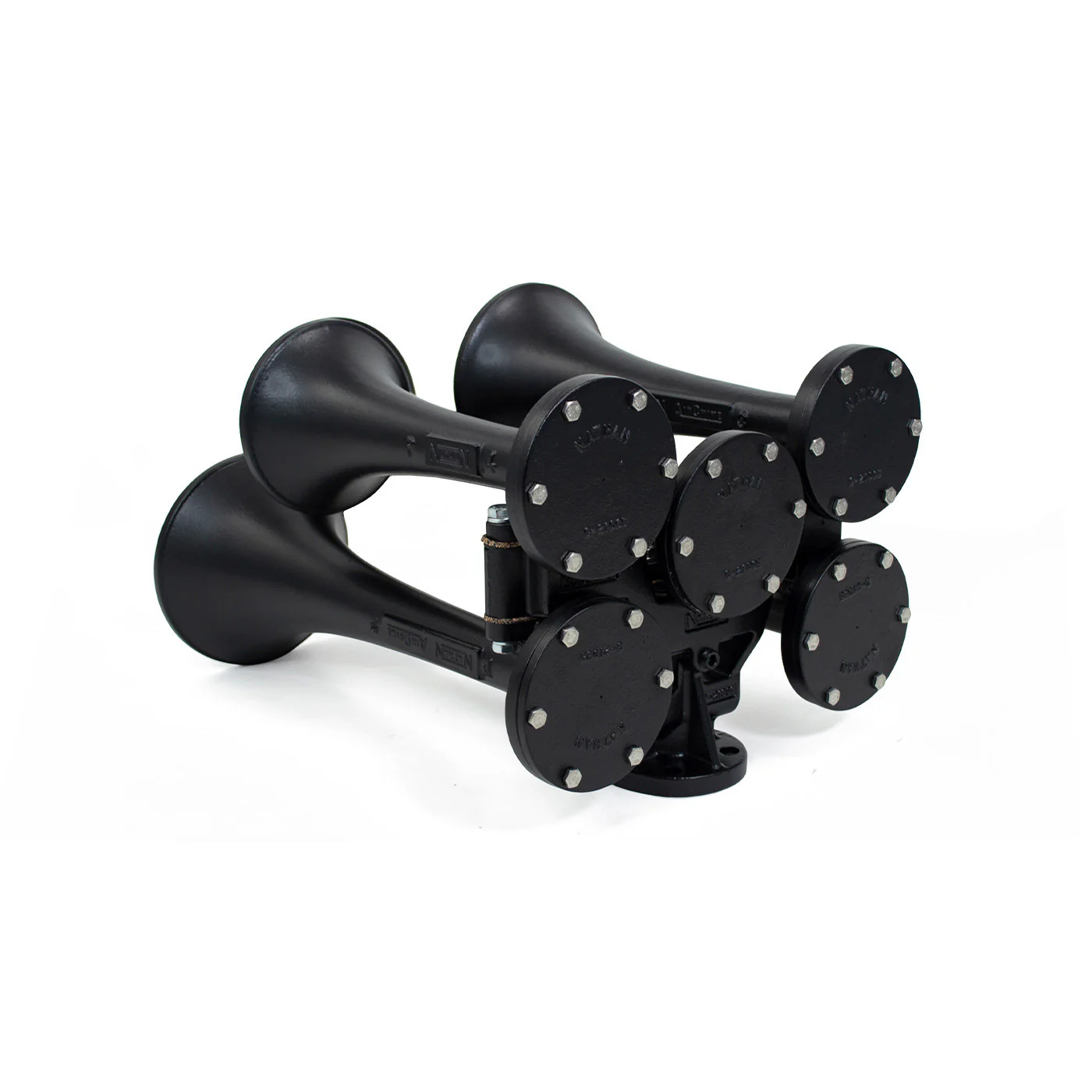
The P5 is a five-chime cast-aluminum locomotive air horn from Nathan AirChime, the company that — by its own statement — supplies over 90% of America’s locomotive horns for both passenger and freight service. The “P” series was introduced by Robert Swanson in 1953 as a refined development of an earlier truck horn, and the P stands for “President’s whistle.” Per Wikipedia’s Nathan Manufacturing entry, Swanson positioned the P-series as a cheaper alternative to the premium K-series, and the five-bell P5 (catalog designation P-12345) went on to equip passenger trains of the Illinois Central, Rock Island, and Southern Pacific, plus various freight units — most famously on the old Southern Railway, which is where the “President’s whistle” nickname took hold.
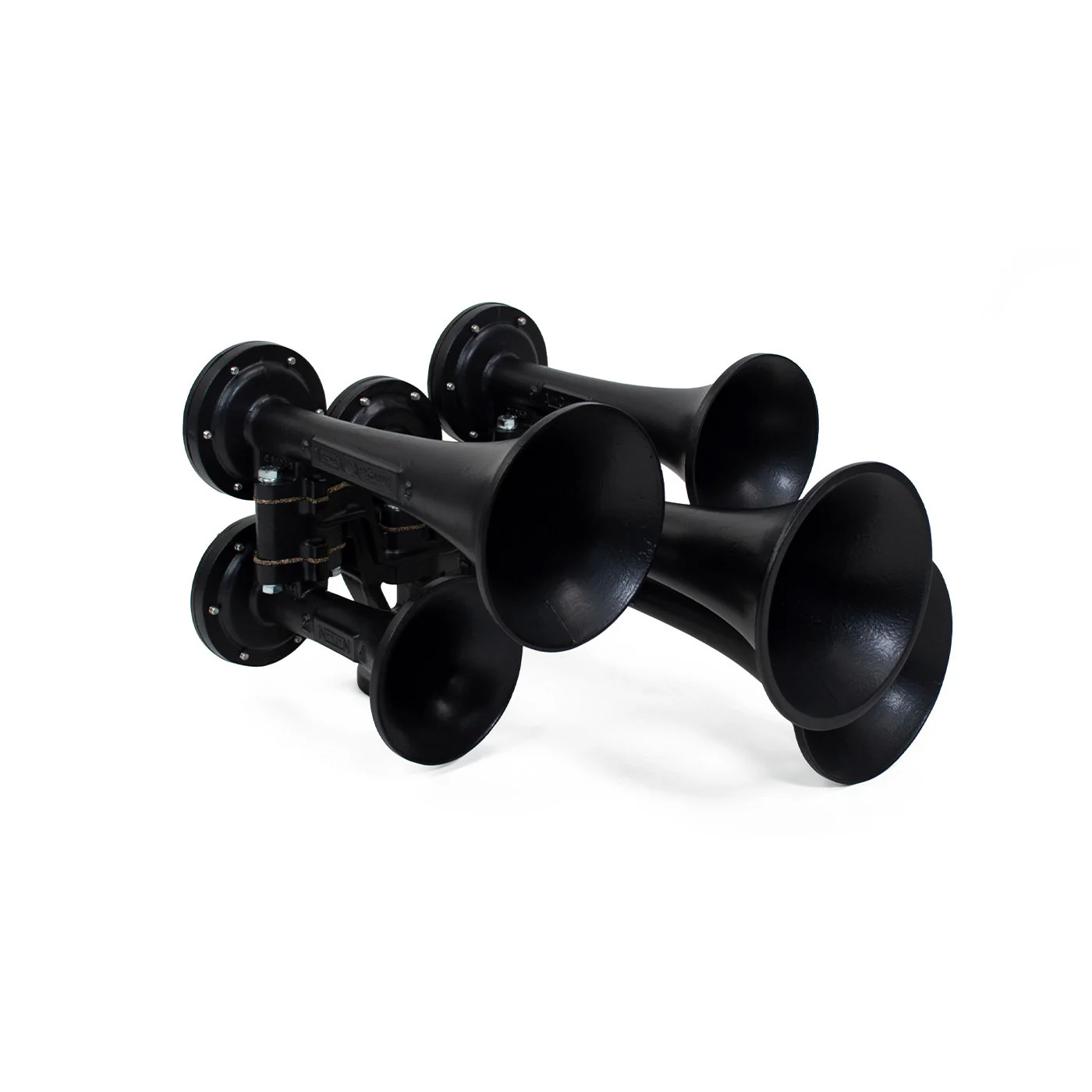
Unlike a consumer kit, the P5 is sold as a stand-alone horn only — it makes no sound until you connect it to a compressed-air system. That makes it a component for a serious build (or a railroad/display application), not a plug-and-play upgrade.
The chord
The defining feature of the P5 is its voicing. According to Wikipedia’s Nathan Manufacturing entry, the standard P5 (P-12345) in pre-1978 castings produces an A major dominant 7th chord — an A7, built on the notes A, C♯, E, and G with the fifth bell doubling for projection. That dominant-7th color is what gives the P5 its warmer, slightly bluesier, old-school character compared with the brighter B major 6th of the modern K5LA. Wikipedia also notes that revised templates introduced after 1978 produced a more discordant result, and that a derived P5A variant — developed in 1975 at the suggestion of Amtrak’s Deane Ellsworth — swapped the #4 bell for a 4a bell to produce a C♯ diminished chord. Buyers chasing the classic sound should confirm which casting/bell set a given unit ships with.
You can compare voicings on our interactive soundboard and read how chord horns generate a tuned chord in how do train horns work.
Specifications
Figures below come from HornBlasters’ standalone P5 listing (dimensions, weight, material, price, warranty), retailer kit listings (PSI, dB), and Wikipedia (chord, history). The manufacturer does not publish a consumer dB or PSI figure.
| Spec | Value |
|---|---|
| Configuration | 5-chime (P-12345) locomotive horn |
| Chord | A dominant 7th (pre-1978 casting) |
| Material | Sand-cast aluminum, stainless-steel diaphragms |
| Dimensions | 19.5” L × 19.75” W × 10” H |
| Weight | 30 lb (13.6 kg) |
| Air inlet | 1/2” NPT |
| Working pressure | ~150 PSI (retailer claim) |
| Sound output | 149 dB, test distance not disclosed (retailer claim) |
| Standalone horn price | ~$1,999.99 (reg. $2,267.99) |
| Complete kit price | ~$2,799.99 (HornBlasters 544K packaged kit) |
| Warranty | 5-year manufacturer defect warranty |
What’s in the box
The P5 ships as a bare horn. There is no air system, valve, or wiring included unless you specifically buy a packaged kit. Plan on sourcing the rest separately:
- Nathan AirChime P5 five-chime horn (stand-alone)
- Mounting hardware as supplied by the retailer
- Manufacturer defect warranty documentation
To actually make noise you will additionally need an air tank (5-gallon class), a 150-PSI compressor, a heavy-duty solenoid valve, and 1/2” air line — see our how to install a train horn guide for the full air-system layout.
Pros
- It is a genuine Nathan AirChime locomotive horn — the same OEM behind the overwhelming majority of U.S. railroad horns.
- The A dominant 7th “President’s whistle” chord is warmer and more vintage than the modern K5LA, and historically distinctive.
- Heavy-duty sand-cast aluminum construction with stainless-steel diaphragms resists corrosion and is built to railroad service life.
- The P-series shares one diaphragm design across its bells, which Wikipedia notes makes it easier to repair than separate-diaphragm Nathan designs like the M-series.
- Backed by a 5-year manufacturer defect warranty on the horn.
Cons
- The horn alone is about $2,000; even the packaged 544K complete kit runs about $2,800.
- At 30 lb it needs structural, frame-grade mounting — not a light bumper bracket.
- A 5-chime manifold is air-hungry; without a 5-gallon tank and a strong compressor you get only a short blast before pressure sags.
- Nathan publishes no consumer dB or PSI spec, so the widely quoted 149 dB is a retailer claim with no stated test distance.
- At locomotive output it far exceeds any street-legal horn limit, making it realistically off-road, property, or display use only.
Alternatives
Three credible alternatives to weigh against the P5:
- Nathan AirChime K5LA — the modern reference five-chime in B major 6th, the sound most Americans recognize as “a train.” Brighter and more iconic than the P5, similar price tier. The right pick if you want the contemporary freight-train chord rather than the vintage President’s whistle.
- Nathan AirChime K3LA — the three-chime K-series cousin. Lighter, cheaper, and far less air-hungry, while still being a real Nathan locomotive horn. The right pick if your air system can’t feed five bells.
- Leslie RS3L Supertyfon — the classic three-chime that dominated North American railroads before the Nathan K-series took over. Smaller and simpler, with its own period-correct voice. The right pick for a 1960s–80s sound at lower cost.
For a far cheaper way to get a loud chord on a vehicle, see our loudest train horn ranking and the buying guide 2026.
Install / compatibility notes
The P5 is a 1/2” NPT, air-only horn — there is no electrical or battery option. A workable on-vehicle setup needs four things beyond the horn: a 5-gallon (or larger) air tank, a 150-PSI-class compressor with a healthy duty cycle, a heavy-duty 1/2” solenoid valve, and 1/2” air line to avoid choking the five bells. Because the body is 30 lb and roughly 20” wide, mount it to the frame or a dedicated steel bracket, not to sheet metal or a plastic bumper. Reversible bells let you aim the output, which matters because at this output level you do not want the horn firing into a cab or a neighbor’s property.
Legally, treat this as off-road, agricultural, marine, or stationary/display equipment. Locomotive-grade output far exceeds any street-legal horn limit — check your state in our legal hub before any on-road use.
Sources
- Nathan AirChime — official manufacturer site — confirms Nathan supplies 90%+ of U.S. locomotive horns and that the P series is one of four horn families offered in single- through five-chime configurations, certified for pitch, frequency, and decibel rating.
- HornBlasters — Nathan AirChime P5 Train Horn — standalone-horn specs: dimensions (19.5×19.75×10”), 30 lb weight, sand-cast aluminum with stainless diaphragms, 1/2” NPT, $1,999.99 price (reg. $2,267.99), 5-year warranty, horn-only packaging, and product photos.
- HornBlasters — Nathan AirChime P5 544K Train Horn Kit — complete packaged-kit price ($2,799.99, reg. $2,825.99), contents (5-gallon 8-port tank, 1NM compressor, 110/150 PSI switch, 1/2” Black Widow valve), and 5-6 second blast-time figure.
- Wikipedia — Nathan Manufacturing — P-series history (1953 introduction, “President’s whistle,” Swanson), P5 A dominant 7th chord, shared-diaphragm/easy-repair design, railroad usage, and the 1975 P5A C♯ diminished variant.
- Amazon — Nathan AirChime P5 Train Horn (5 Trumpets) — retailer “149 actual dB” decibel claim cross-check.
- Amazon — Nathan AirChime P5 544K 5-Gallon 150 PSI Kit — complete-kit pricing/air-system reference (5-gallon tank, 150 PSI working pressure).
- Wikimedia Commons — Sound of American Train Horn Nathan AirChime P5 — recorded example of the P5 chord.
Train Horn Hub aggregates publicly available data. We do not test products in-house. All trademarks belong to their respective owners.
The P5 is the right Nathan for a builder who wants the warmer, vintage "President's whistle" chord instead of the ubiquitous K5LA — but its $2,000 horn-only price, 30 lb weight, and serious air-system demands keep it firmly in dedicated-hobbyist territory.
Frequently asked questions
Quick answers to the questions people ask most about this topic.
- How loud is the Nathan AirChime P5?
- Retailers list the P5 at 149 dB, but Nathan does not publish a consumer decibel figure and the retailer claim states no test distance. Either way it is locomotive-grade output — well past the OSHA pain threshold and far above any street-legal car horn.
- What chord does the P5 play?
- The standard pre-1978 P5 (P-12345) sounds an A dominant 7th chord — the warmer, vintage "President's whistle" voice. A later P5A variant swapped one bell to produce a C-sharp diminished chord, so confirm the bell set when buying.
- Is the P5 a complete kit?
- No. The P5 is sold as a stand-alone horn only — roughly $2,000 for the horn itself. You still need a 5-gallon air tank, a 150-PSI compressor, a solenoid valve, and 1/2-inch air line — or the packaged HornBlasters 544K kit, which bundles all of that with the horn for about $2,800.
- P5 vs K5LA — which Nathan should I buy?
- The K5LA is the modern B major 6th chord most people recognize as a freight train; the P5 is the older A dominant 7th President's whistle. Pick the P5 if you specifically want the warmer vintage sound, and the K5LA if you want the contemporary, more iconic chord.
- Is the Nathan P5 legal on a street vehicle?
- Generally no. Its locomotive-level output far exceeds any street-legal horn limit, so it is realistically limited to off-road, agricultural, marine, or stationary and display use.