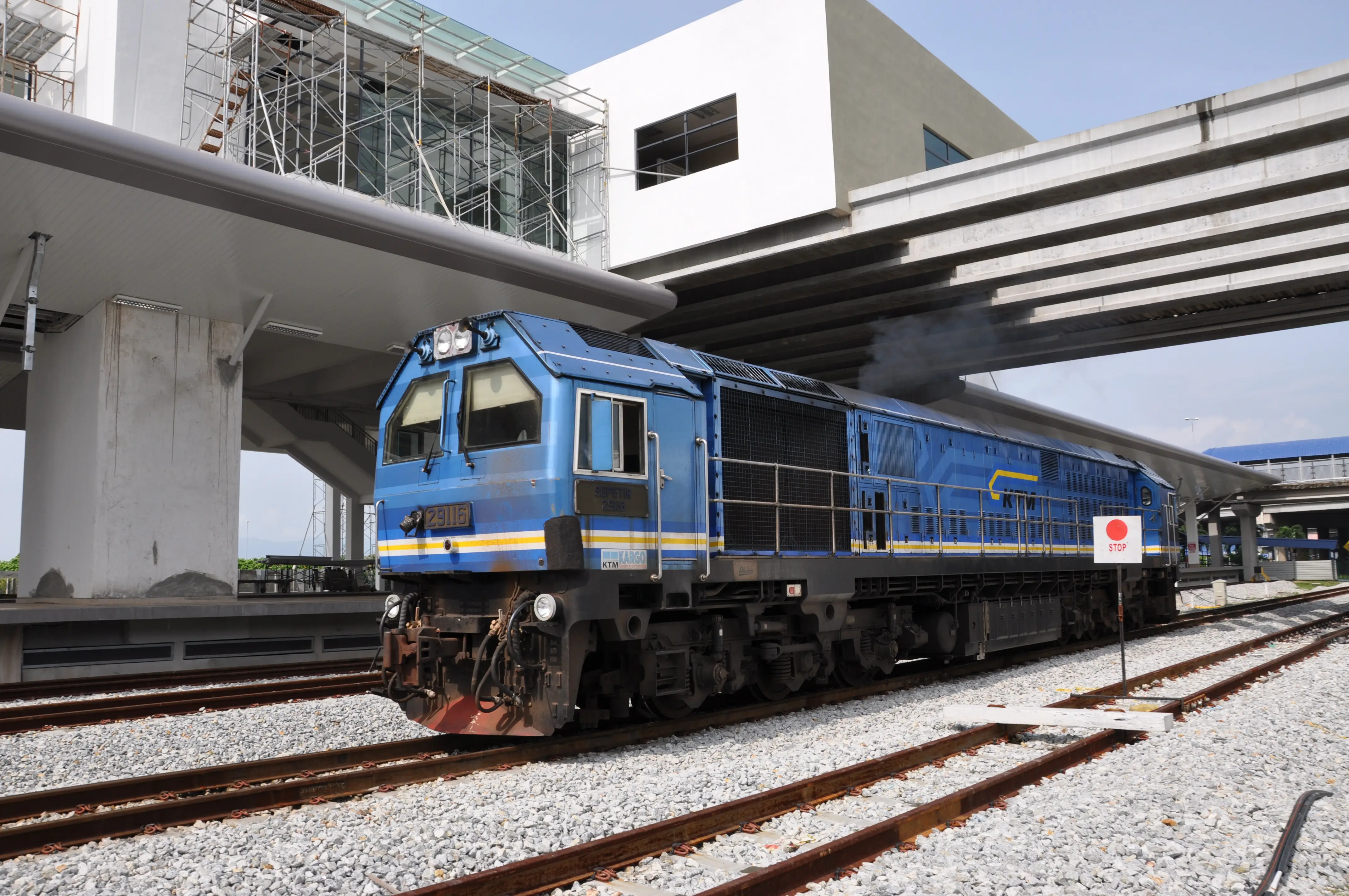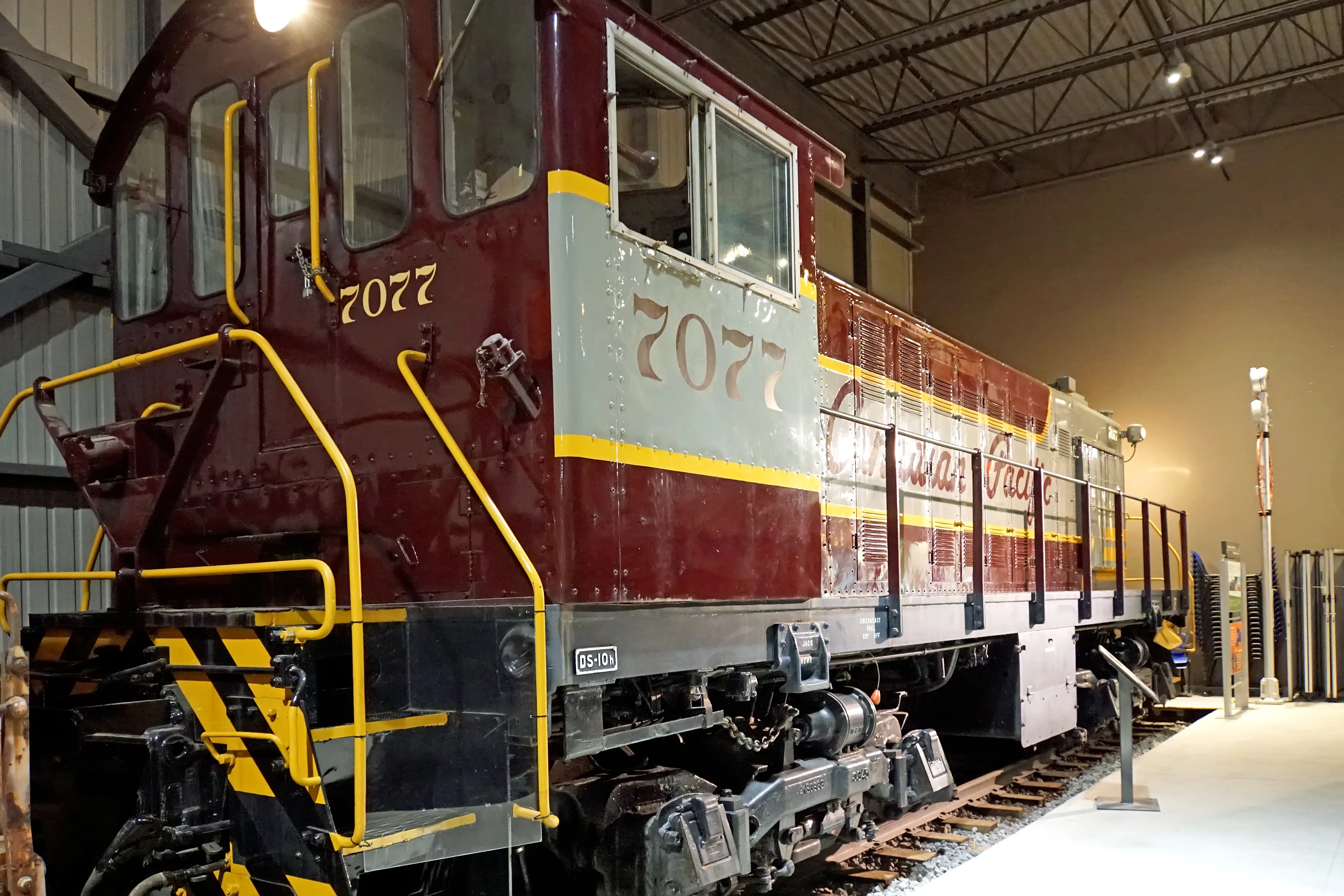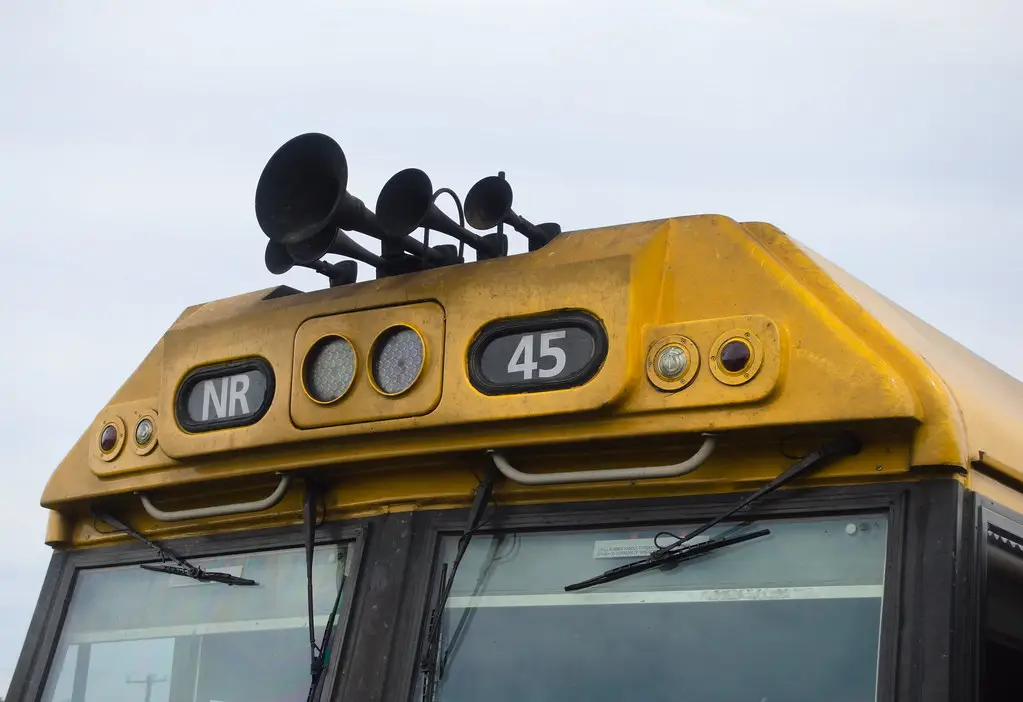
- +Real Leslie Controls locomotive horn — classic 1930s engineering still in production
- +144 dB at 100 PSI with audibility up to 3.5 miles
- +Distinctive 'booming' tone — different timbre from Nathan K-series chord horns
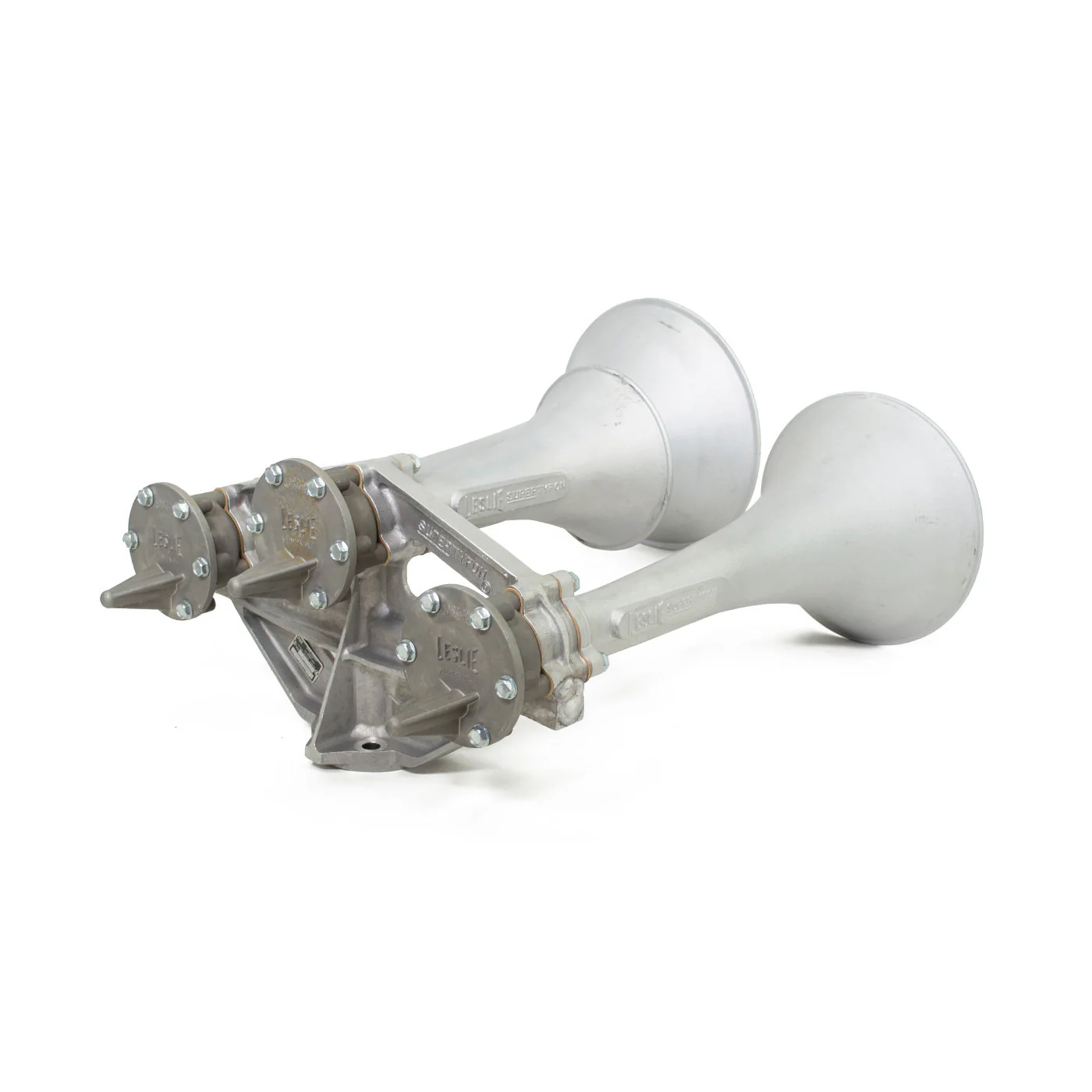
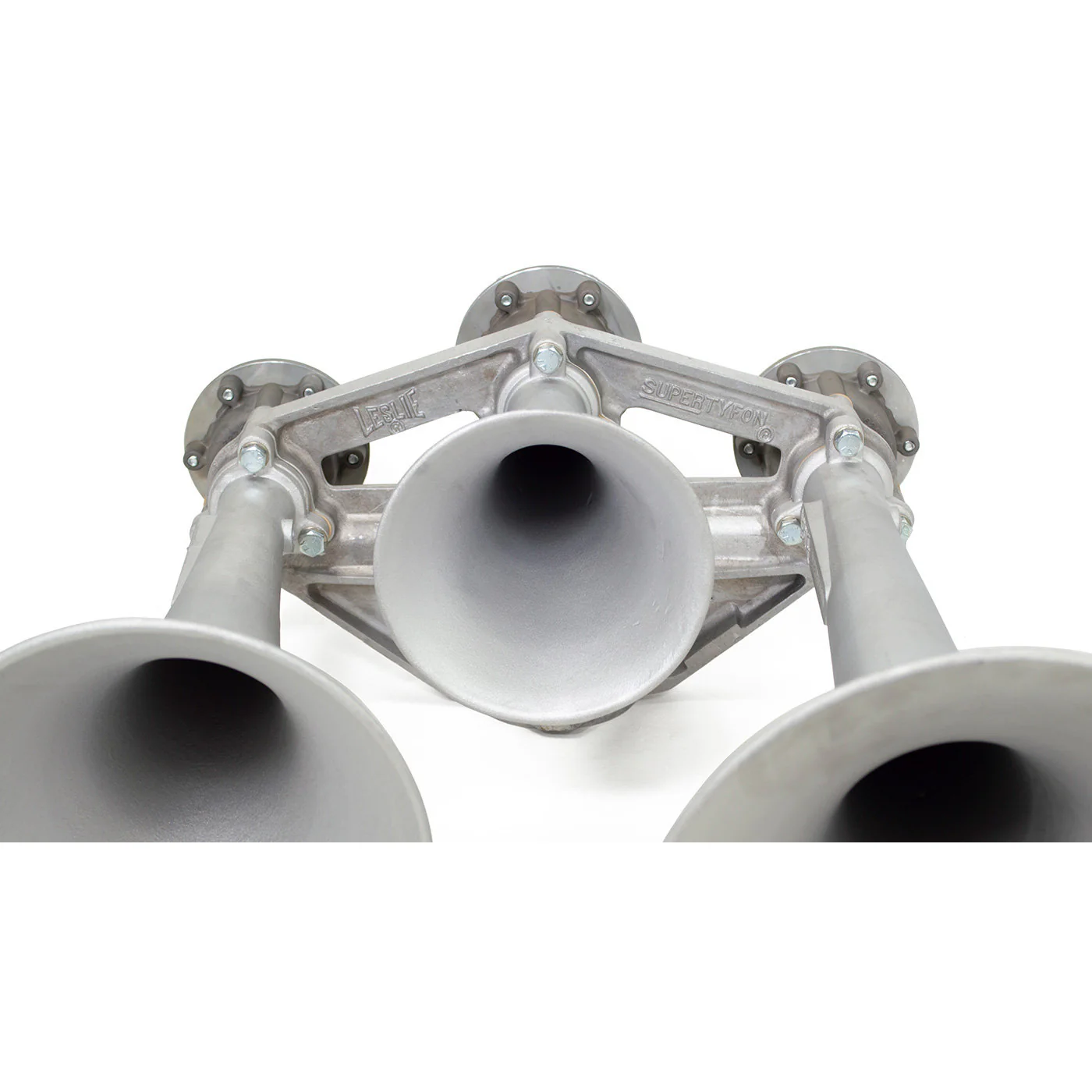
- +Robust cast construction — bells #25, #31, #44 in single-cast manifold
- +Once the most common horn on North American railroads (per HornBlasters); now historic / heritage choice
- −$2,849.99 standalone — still about $900 more than the Nathan K3LA at $1,949.99
- −Standalone only — no air system, valve, or wiring included
- −26.5″ × 17.5″ × 9.25″ is large — fits fewer install envelopes than the K3LA
- −Requires aftermarket 5+ gallon tank, 1NM compressor, valve, complete wiring
- −Same legal restrictions as any 144 dB horn — exceeds state vehicle code caps in most jurisdictions
Methodology
This review aggregates publicly available information from HornBlasters’ Leslie product page, Locomotive Parts Supply, and Speedzone Performance retailer listings. We do not perform hands-on testing. All numeric claims cite their source. Note: HornBlasters acquired the Leslie Supertyfon assets in 2021 and now manufactures this line, so new RS-3L units are HornBlasters-built reproductions of the classic Leslie design. Last reviewed: August 26, 2026.
Quick verdict
The Leslie RS-3L Supertyfon is, in editorial opinion, the historic-classic alternative to the Nathan K-series. Once the most common horn on North American railroads (per Wikipedia: Train horn), Leslie horns lost ground to Nathan AirChime over the decades but remain in production for buyers who specifically want the classic Supertyfon cast-bell sound — the line is now built by HornBlasters, which acquired the Leslie Supertyfon assets in 2021. The RS-3L is the largest 3-chime locomotive horn available, with 144 dB output audible up to 3.5 miles. We rate it 4.4/5 for buyers who want a real Leslie horn and have the budget — at $2,849.99 standalone, it’s expensive enough to be a deliberate choice, not a compromise. Notably, HornBlasters cut the standalone price from $4,399.98 to $2,849.99 as of August 2026, narrowing the gap to the Nathan K3LA considerably.
What it is
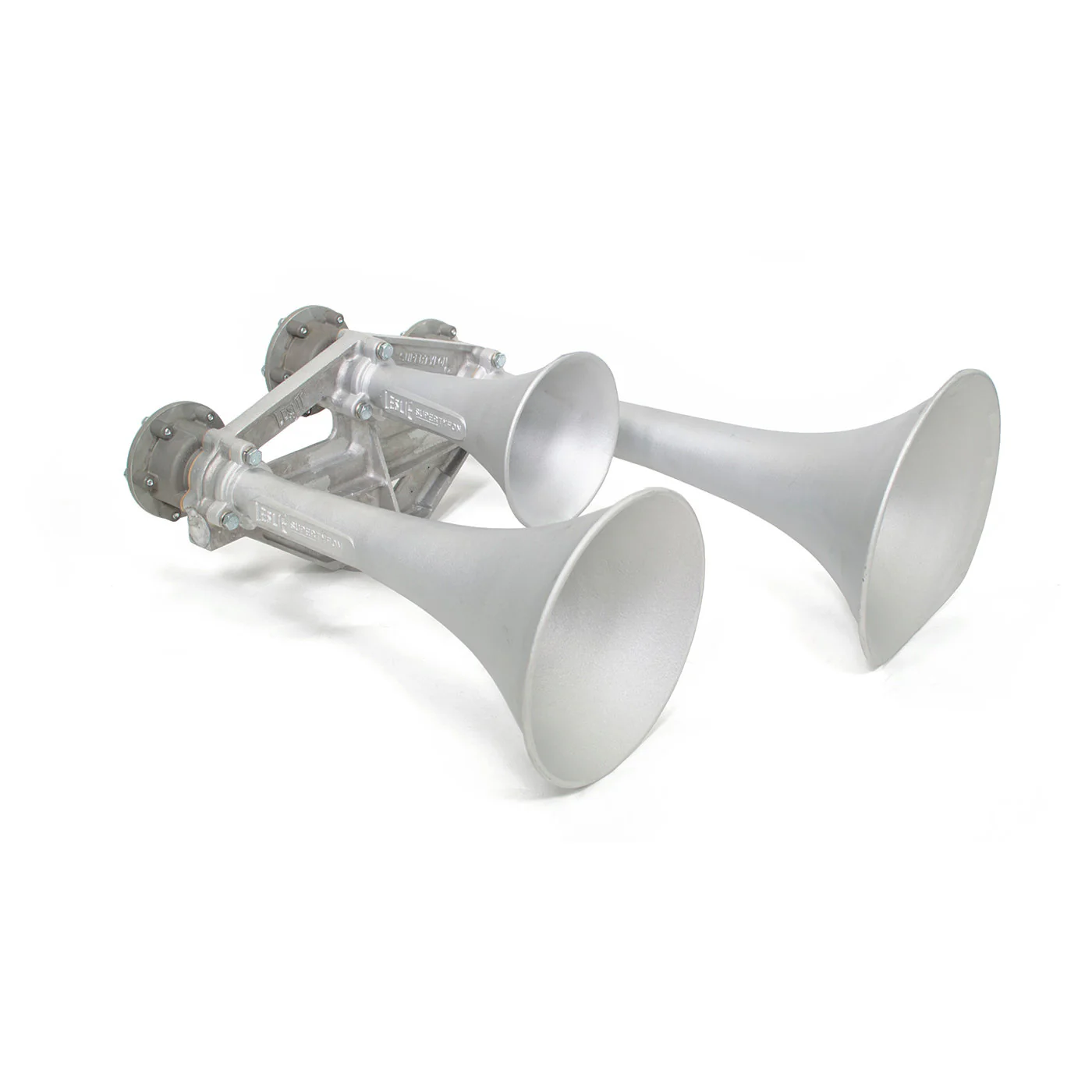
The Leslie RS-3L Supertyfon is a 3-chime locomotive air horn manufactured by Leslie Controls — historically the second-largest U.S. locomotive horn manufacturer behind Nathan AirChime. The model designation:
- RS — Reduced Supertyfon (vs the larger RS-5T 5-chime version)
- 3 — three chimes
- L — low-mount manifold (similar to Nathan’s low-profile naming)
The Supertyfon design traces to the mid-20th century and remained in standard locomotive service for decades before being gradually replaced by the Nathan K-series. The RS-3L is still manufactured for aftermarket and locomotive replacement orders — now by HornBlasters, which acquired the Leslie Supertyfon line in 2021.
History and adoption
Per Wikipedia: Train horn and HornBlasters: World’s Loudest Train Horns:
- 1930s — Leslie begins railroad airhorn production (the “Tyfon” line, licensed from Kockums Mekaniska Verkstad)
- ~1950s — Leslie develops the multi-chime Supertyfon series (HornBlasters dates the line to 1951)
- Mid-century — Leslie horns become a dominant North American locomotive horn standard
- Later decades — Nathan AirChime K-series progressively replaces Leslie on new locomotive builds; Leslie horns remain on heritage and older equipment
- Today — Leslie Supertyfon horns are produced (now by HornBlasters, which acquired the line in 2021) for aftermarket / heritage railroad / collector use; new locomotive builds overwhelmingly use Nathan AirChime
The Leslie RS-3L is “once the most common horn in use on North American railroads” per Wikipedia (Wikipedia: Train horn) — a historic claim, not current.
Specifications
Figures below are from the current HornBlasters product page (the new-production unit). Note that rebuilt-original Leslie units sold elsewhere — e.g. Locomotive Parts Supply — can differ in dimensions and weight:
| Spec | Value |
|---|---|
| Configuration | 3-chime, low-mount manifold |
| Bells included | #25, #31, #44 |
| Body material | Die-cast aluminum (HornBlasters current production) |
| Weight | 25 lb (11.34 kg) — lighter than K3LA |
| Dimensions | 26.5″ L × 17.5″ W × 9.25″ H |
| Air inlet | 1/2″ NPT |
| Operating pressure | 100 PSI minimum (rated dB at 100 PSI) |
| Sound output | 144 dB at 100 PSI |
| Audibility | Up to 3.5 miles |
| Standalone horn price | $2,849.99 USD (HornBlasters) |
| Warranty | 1-year manufacturer’s defect warranty (HornBlasters) |
| Standard finish | Cast metal natural |
What’s in the box
Per the HornBlasters product page:
- 1× Leslie RS-3L Supertyfon (standalone horn manifold)
- Mounting hardware
Does NOT include: valve, air system, wiring, tank, compressor
Compared to the Nathan K3LA
| Spec | Leslie RS-3L | Nathan K3LA |
|---|---|---|
| Chimes | 3 | 3 |
| Manufacturer | Leslie Controls (historic) | Nathan AirChime (90%+ market share) |
| Body construction | Die-cast aluminum | Die-cast aluminum + stainless |
| Weight | 25 lb | 32 lb |
| Length | 26.5″ | 18.25″ |
| Width | 17.5″ | 16.25″ |
| dB at 100 PSI | 144 (audible 3.5 miles) | 144 at 10 ft |
| Standalone price | $2,849.99 | $1,949.99 |
| Best for | Heritage / classic timbre | Modern fleet standard / Metra adoption |
The Leslie RS-3L is more expensive but more historically distinctive. The K3LA is the modern fleet horn; the RS-3L is the classic that the K3LA replaced. For most buyers, the K3LA is the better practical choice; for buyers specifically hunting the 1930s tone, only the RS-3L fits.
Pros and cons
Pros:
- Real Leslie locomotive horn with 1930s heritage engineering still in production.
- Distinctive timbre — Leslie horns trend slightly brighter with more upper-harmonic content than Nathan K-series.
- Audible up to 3.5 miles at the rated 100 PSI — exceptional projection.
- Heritage value — collectors and restoration projects specifically want this horn.
- Lighter than K3LA at 25 lb vs 32 lb.
Cons:
- $2,849.99 standalone is still about $900 more than the Nathan K3LA’s standalone price.
- Larger footprint (26.5″ L vs K3LA’s 18.25″ L) — fits fewer install envelopes.
- Standalone only — needs aftermarket air system (~$1,500+ for tank + compressor + valve + wiring).
- 1-year manufacturer’s defect warranty (per HornBlasters) — short for a purchase near $3,000.
- Less aftermarket support than Nathan products in the modern collector market.
Alternatives
- Nathan AirChime K3LA — modern 3-chime at $1,949.99 standalone. The right pick if you want a real locomotive horn at lower cost.
- Nathan AirChime K5LA — 5-chime at $4,499.99 standalone (HornBlasters). The reference modern locomotive horn.
- Kleinn 230 “The Beast” — 3-trumpet aftermarket replica at $249.95 standalone. Not a real Leslie but similar form factor at much lower cost.

Frequently asked questions
Why is the Leslie more expensive than the Nathan K3LA?
Limited production and historic significance. Leslie horns aren’t manufactured in volume anymore — each unit is essentially a heritage / restoration item. Nathan K-series horns ship in volume to current locomotive fleets, giving Nathan economies of scale. The Leslie premium reflects rarity, not better engineering.
What’s the difference in sound between Leslie and Nathan?
Leslie horns trend slightly brighter — more upper-harmonic content, sharper attack. Nathan horns trend slightly warmer — fuller fundamentals, more sustained tone. Both are loud enough to be locomotive-class; the timbre difference is what enthusiasts argue about. Most casual listeners can tell them apart side-by-side.
Is it worth $2,850 for a Leslie vs the K3LA at $1,950?
Only if you specifically want the Leslie sound. For most buyers the Nathan K3LA gives 95% of the same locomotive-class output and projection for about $900 less. The Leslie premium is for collectors and restoration projects where authenticity matters — though the August 2026 price cut from $4,399.98 makes it a much easier call than it used to be.
Where do I buy a Leslie RS-3L?
- HornBlasters — $2,849.99 standalone (in stock)
- Speedzone Performance
- Locomotive Parts Supply
- eBay (used / restoration market — variable pricing)
Will the RS-3L fit my truck?
Maybe. At 26.5″ L × 17.5″ W × 9.25″ H, it’s larger than a Nathan K3LA. Verify spare-tire-delete bracket clearance before ordering. Class 8 trucks (Peterbilt, Kenworth) typically host it without issue.
Is the 3.5-mile audibility claim real?
Per Leslie / HornBlasters’ published spec at 100 PSI, yes — under ideal atmospheric conditions on flat terrain. Real-world distance is reduced by buildings, vegetation, and atmospheric absorption. By the inverse-square law, 144 dB at the source drops to about 73 dB at 3.5 miles — barely above ambient noise, audible only in quiet conditions.
Is the Leslie legal on a road vehicle?
Same as any 144 dB locomotive horn — installation broadly legal, routine use at full output on public roads typically violates state vehicle codes. Off-road use is broadly unrestricted. See /legal/ and /tools/state-legality/.
Sources
- HornBlasters — Leslie RS-3L Train Horn Product Page ($2,849.99 standalone, 144 dB / 100 PSI / 3.5 mi audibility, 25 lb / 26.5″ L, 1-year warranty)
- Locomotive Parts Supply — Leslie Supertyfon RS3L (cross-verification + heritage context; rebuilt-original listing, sold out as of Aug 2026)
- Speedzone Performance — Leslie RS3L Train Horn (retailer listing)
- HornBlasters — World’s Loudest Train Horns (Leslie Supertyfon heritage; HornBlasters acquired the Leslie Supertyfon line in 2021)
- Wikipedia — Train horn (“once the most common horn in use on North American railroads”; Leslie historical adoption)
Train Horn aggregates publicly available data. We do not test products in-house. All trademarks belong to their respective owners. Pricing and availability verified August 26, 2026.
The RS-3L is the right pick for buyers who specifically want the classic 1930s Leslie sound — the historic alternative to Nathan's modern K-series. Beautiful cast construction and authentic timbre, but expensive and large. For most buyers the [Nathan K3LA](/reviews/nathan-k3la/) is the more practical real-locomotive 3-chime.
Frequently asked questions
Quick answers to the questions people ask most about this topic.
- How loud is the Leslie RS-3L Supertyfon?
- It is rated at 144 dB at 100 PSI, with audibility claimed up to 3.5 miles under ideal atmospheric conditions on flat terrain.
- Why is the Leslie RS-3L more expensive than the Nathan K3LA?
- Limited production and historic significance. Leslie horns are essentially heritage or restoration items not made in volume, while Nathan K-series horns ship in volume to current locomotive fleets, giving Nathan economies of scale. At $2,849.99 standalone (down from $4,399.98 in mid-2026) the Leslie still costs about $900 more than the K3LA's $1,949.99.
- Does the Leslie RS-3L come with an air system?
- No. It ships as a standalone horn manifold with mounting hardware only. It does not include a valve, air system, wiring, tank, or compressor, so you need to source an aftermarket air system separately.
- Will the Leslie RS-3L fit my truck?
- Maybe. At 26.5 inches long by 17.5 inches wide by 9.25 inches high it is larger than a Nathan K3LA, so verify spare-tire-delete bracket clearance before ordering. Class 8 trucks like Peterbilt and Kenworth typically host it without issue.
- What is the difference in sound between Leslie and Nathan horns?
- Leslie horns trend slightly brighter with more upper-harmonic content and a sharper attack, while Nathan horns trend slightly warmer with fuller fundamentals and a more sustained tone. Both are loud enough to be locomotive-class, and most listeners can tell them apart side-by-side.