Teflon Tape vs Pipe Dope for Train Horn Fittings: Which Seals Better?
Teflon tape or pipe dope on train horn NPT fittings? Port-by-port guide for tanks, solenoids and compressor threads, with torque specs and the mistakes that cause leaks.
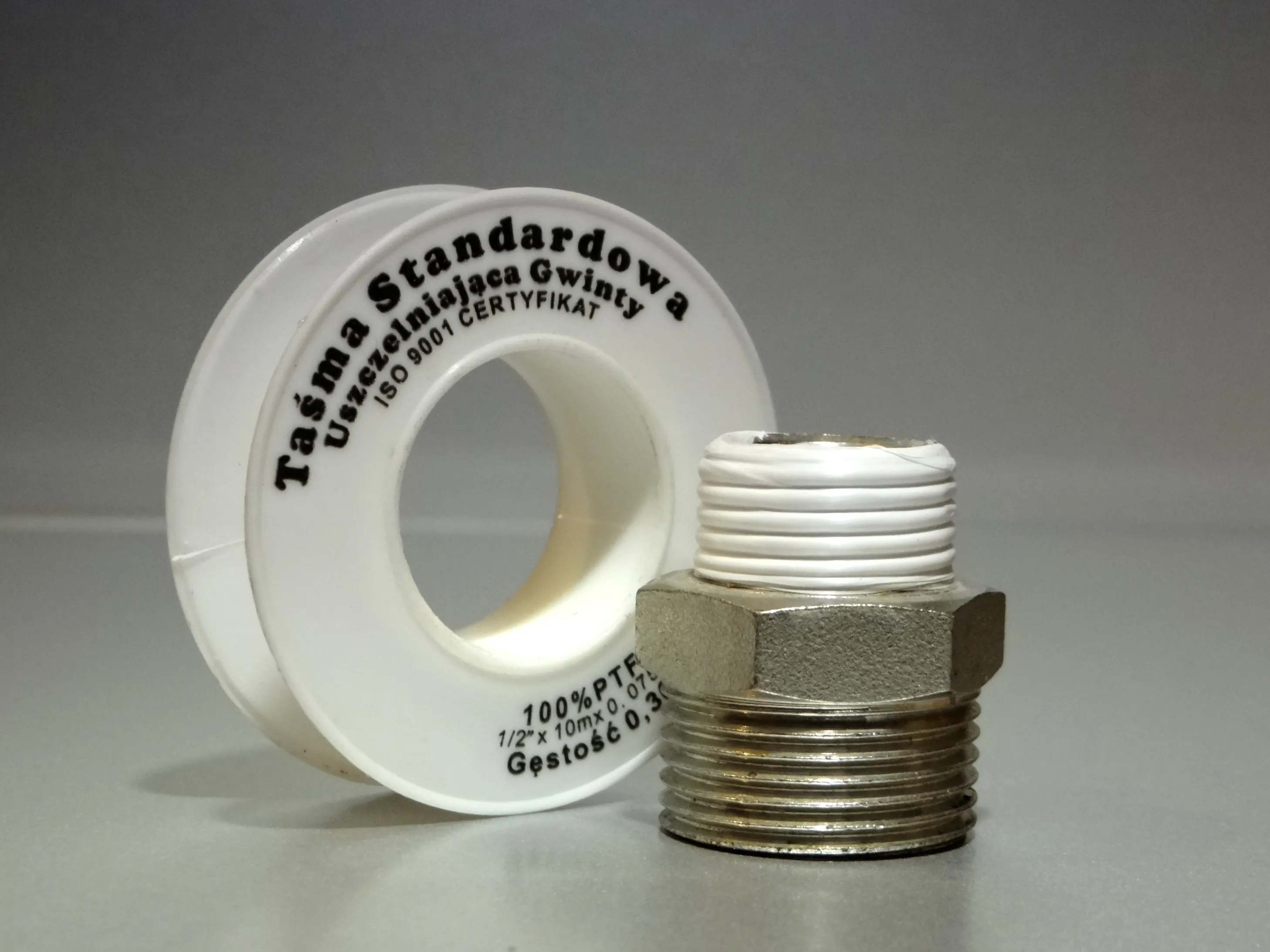
Every train horn kit ships with a roll of white tape and a bag of brass, and the question that follows is always the same: Teflon tape or pipe dope on train horn NPT fittings? The honest answer is that both work when applied right, both fail when applied wrong, and the best choice changes depending on whether the port belongs to a tank, a solenoid, or a hot compressor.
Why NPT Threads Need Sealant in the First Place
NPT (National Pipe Taper) is the threaded standard under nearly every port in a horn kit: tank bungs, the compressor discharge, the pressure switch, safety valve, drain cock, gauge, and the male end of most push-to-connect fittings. The threads taper at 3/4 inch per foot, and the seal forms when the thread flanks crush against each other as you tighten. That deformation leaves a tiny spiral leak path, which is why plain NPT threads need a sealant to fill it.
HornBlasters’ installation manual for its 540 kits puts it bluntly: Teflon tape or a locking compound should be used on every fitting in the air system to prevent leaks, unless a white or red PTFE paste is already applied. That last clause matters. Many kit components arrive with a factory pre-coat on the threads, and the same manual says that when the drain cock or safety valve already has sealant on its threads, adding tape is unnecessary.
If you are still sorting out which fittings in your kit are NPT and which are push-to-connect or compression, start with our train horn air fittings guide. Sealant only belongs on tapered pipe threads. It has no business on a ferrule seat, a flare face, an O-ring, or the tube side of a push-to-connect fitting.
PTFE Tape: What It Does Well and Where It Bites
Thread seal tape is a thin film of PTFE, usually 3.5 mil thick for standard white tape and about 4 mil for the high-density variety, per Boshart’s product support pages. It is clean, has an indefinite shelf life, and Oatey describes it as beginner-friendly and best suited to smaller threads of one inch or less, which covers every port on a horn kit.
Tape’s weakness is mechanical: it shreds. Master Tool Repair’s air-compressor guide tells you to start the wrap two threads back from the end so fragments do not break off into the airstream and clog the pressure switch or valves. AIMS Industrial’s Loctite guide makes the same point, warning that tape can shred into any system with filters or valves downstream. A train horn solenoid is exactly that kind of valve.
Heat is not tape’s problem. Boshart rates standard PTFE tape from -310°F to 536°F, which is far beyond anything a horn compressor will produce.
The wrap that actually seals, drawn from Master Tool Repair and Boshart:
- Clean the male threads. No old tape, no grit, no leftover paste.
- Start on the second thread so nothing overhangs the end of the fitting.
- Wrap clockwise as you look at the open end, so the tape tightens instead of unravels when you thread the fitting in.
- Pull it tight so it settles into the threads. Three to four wraps is the standard for 1/4” and 3/8” NPT air fittings.
- Any time you break the joint, strip the old tape and start over.
Pipe Dope: Two Very Different Products Share One Name
“Pipe dope” covers two chemistries that behave nothing alike, and knowing which one you are holding matters more than the debate itself.
Non-hardening paste. RectorSeal No. 5 is the classic example: a soft-set, slow-drying compound that its data sheet describes as non-hardening and lists compressed air among approved services. It is rated to 2,600 psi on gases, brushable from 20°F to 140°F, and approved for brass, aluminum, stainless steel, and iron. Because it never fully sets, joints break out easily later. The data sheet says to apply it to the male threads only on pipe up to 1-1/4”, and that air lines up to 2” and under 100 psi can be pressurized immediately. Most horn tanks run above 100 psi, so give the joint some drying time before the first full fill.
Anaerobic sealant. Loctite 545 and 567 are liquids that cure only when confined between close-fitting metal threads with no air. Viair, whose compressors ship in HornBlasters kits among others, names Loctite 545 as its recommended sealant for fittings and external compressor hardware, and the Viair 400C manual says outright that thread tape is not recommended on the compressor. Henkel describes 545 as formulated for the fine threads of hydraulic and pneumatic fittings with no clogging fillers or particles, rated from -65°F to 300°F. Loctite 567 is the higher-viscosity sibling built for tapered, coarse metal threads on steel, stainless, and aluminum, rated from -65°F to 482°F.
The catch with anaerobics is on Henkel’s own product pages: they may cause stress-cracking in sensitive polymers and should generally be avoided on plastic parts. AIMS Industrial’s Loctite guide lists 567 and 577 among the products that can crack plastic fittings. If your solenoid body, gauge, or adapter is plastic, that rules them out.
Kleinn takes the liquid-sealant route in its own kits. Its Super Duty install manual calls for one to two drops of Kleinn Air Horn Juice on the end of each male thread, then hand-tightening and a further quarter to half turn with a wrench, with Teflon tape listed as an acceptable alternative. The manual also notes you can set a fitting’s final angle by letting the sealant cure in position.
Tape vs Dope: Head-to-Head
| Factor | PTFE tape | Non-hardening paste | Anaerobic sealant |
|---|---|---|---|
| Clean to apply | Yes | Messy | Yes, one or two drops |
| Shred and debris risk | Yes, if wrapped past the end | None | None, no fillers |
| Works on plastic parts | Yes | Check the label (No. 5: not ABS or CPVC) | No, stress-cracking risk |
| Repositionable after tightening | Poorly | Yes, while soft | Only until it cures |
| Break-out later | Easy | Easy | Needs a firm wrench |
| Vibration resistance | Moderate | Moderate | Best (locks the joint) |
| Temperature (per makers) | -310°F to 536°F | Brushable 20°F to 140°F | 545: to 300°F; 567: to 482°F |
| Rework | Strip and re-tape | Wipe and reapply | Clean off cured film first |
Port-by-Port: What to Use Where on a Horn Kit
- Tank bungs, reducer bushings, and plugs. Either works. A HornBlasters 5-gallon tank has seven 1/2” NPT ports and one 3/4” port, and every unused one needs a plug with sealant. Tape is fine here because these joints are big, static, and downstream of nothing delicate. Anaerobic sealant wins if the tank rides in a high-vibration spot.
- Compressor discharge and leader hose fittings. Follow Viair: thread sealant, not tape. The leader hose and its fittings get very hot in use, and a liquid sealant will not shed fragments toward the check valve. Do not remove or rotate the inline check valve in the leader hose while you work; HornBlasters warns that doing so damages its seals and voids the compressor warranty.
- Solenoid valve ports. This is where tape debris does the most damage, because the valve seat is the first thing downstream of the tank. Use anaerobic sealant if the valve body and fittings are brass. If any part is plastic, use tape, wrapped short of the end, and blow the joint clear before assembly.
- Pressure switch. Tape or paste on the bushing, then hand-tighten only. HornBlasters says not to tighten by twisting the switch box, and the switch belongs on the side or top of the tank so condensation cannot drain into it.
- Gauge and safety valve. Tape or paste, side or top of the tank. Skip it entirely if the threads arrive pre-coated.
- Drain cock. Anything that seals. This joint gets opened often for draining, so a non-hardening paste that breaks out cleanly is a good fit.
Torque: How Tight Is Tight Enough
More torque is not more seal, and brass is soft. Viair’s 400C manual gives a recommended torque of 12 to 15 ft-lbs for properly sealed fittings on the compressor. Kleinn’s rule of thumb for tank fittings is hand-tight plus a quarter to half turn with a wrench. Master Tool Repair adds the failure mode you are trying to avoid: too little tape will not seal, but too much can crack the female casting when you cinch it down.
If a joint still weeps after that, the problem is the sealant or the part, not the torque. Reseal it rather than reaching for a longer wrench.
Mistakes That Cause Most Sealant Leaks
- Tape wrapped over the end of the fitting, so a shred rides into the pressure switch or solenoid.
- Tape wrapped backward, so it unravels as the fitting tightens.
- Anaerobic sealant on a plastic gauge, solenoid body, or adapter.
- Tape stacked on top of a factory pre-coat, which HornBlasters says is unnecessary and only adds bulk to the joint.
- Sealant on a compression ferrule, flare seat, or the tube side of a push-to-connect fitting.
- Reusing old tape on a joint that was broken and reassembled.
Fixing a Leak You Already Have
If the tank drains overnight and you suspect a threaded joint, the fastest path is soapy water on every port with the compressor unpowered, which we walk through in our air leak diagnosis guide. Once you find the weeper, back the fitting out, strip every trace of old tape or paste from both threads, and reseal with whichever product the port-by-port list calls for. Then confirm the fix with a full bench test and first fill before anything goes back on the truck.
Keep reading
- Train Horn Air Fittings: Push-to-Connect vs Compression vs NPT
- How to Find and Fix Air Leaks in a Train Horn System
- Bench Test Your Train Horn Kit: First Fill & Leak Check Guide
- Train Horn Check Valve: What It Does, How It Fails, How to Fix
- Steel vs Aluminum vs Stainless Air Tanks for Train Horns
Sources
- HornBlasters 540 Kit Installation Instructions (PDF) — tape or locking compound on every fitting unless PTFE paste is pre-applied; seven 1/2” and one 3/4” tank ports; pressure switch hand-tighten only and side/top mounting; leader hose check valve warning; pre-coated drain cock and safety valve
- Viair 400C Compressor User Manual (PDF) — “thread tape is not recommended,” 12 to 15 ft-lbs torque, leader hose and fittings become very hot
- Viair FAQ — Loctite 545 recommended on all fittings and external compressor parts
- LOCTITE 545 product page — Henkel — -65°F to 300°F, no clogging fillers, hydraulic/pneumatic fine-thread lubricity, plastic stress-cracking warning
- LOCTITE 567 product page — Henkel — -65°F to 482°F, high-viscosity sealant for tapered coarse metal threads, steel/stainless/aluminum, plastic stress-cracking warning
- RectorSeal No. 5 Product Data Sheet (PDF) — non-hardening, compressed air listed, 2,600 psi gases, brushable 20°F to 140°F, brass/aluminum/stainless, not ABS or CPVC, male threads only up to 1-1/4”, immediate pressurization limits
- Kleinn SDKIT17-230/734 Installation Manual (PDF) — 1-2 drops of Air Horn Juice per male thread, hand-tight plus 1/4 to 1/2 turn, Teflon tape as an acceptable NPT sealant
- Stop the Leaks: The Master Guide to Using Teflon Tape on Air Compressors — Master Tool Repair — 3-4 wraps for 1/4” and 3/8” NPT, start two threads back, clockwise wrap, no tape on compression/O-ring/flare seals, too much tape can crack the female casting
- What is the temperature rating of PTFE thread seal tape? — Boshart — -310°F to 536°F for standard tape, 3.5 mil standard and 4 mil high-density thickness
- Pipe Dope vs. Teflon Tape: Which Should You Use? — Oatey — tape best for threads of 1” or less and beginner-friendly, dope for larger/high-pressure joints, check dope labels for plastic compatibility
- Loctite Thread Sealant Guide: 577 vs 567 vs 542 — AIMS Industrial — anaerobic sealants can stress-crack plastic fittings; tape can shred into systems with filters and valves downstream
- National pipe thread — Wikipedia — 3/4 inch per foot taper, thread-deformation sealing, sealant requirement, NPTF dryseal variant
Frequently asked questions
Quick answers to the questions people ask most about this topic.
- Should I use Teflon tape or pipe dope on train horn fittings?
- Both seal NPT threads when applied correctly. Tape is clean, cheap, and safe on plastic parts, while anaerobic sealants like Loctite 545 resist vibration and leave no debris but can stress-crack plastic. Viair recommends thread sealant rather than tape on its compressors, and HornBlasters accepts either on tank fittings.
- Can Teflon tape damage a train horn solenoid valve?
- Yes, if it is wrapped past the end of the fitting. Shreds of tape can travel downstream and lodge in the solenoid seat or pressure switch. Start the wrap two threads back from the end, or use a filler-free anaerobic sealant on brass solenoid fittings.
- How many wraps of Teflon tape on 1/4 inch NPT air fittings?
- Three to four wraps is the standard for 1/4 inch and 3/8 inch NPT air fittings. Wrap clockwise as you look at the open end so the tape tightens rather than unravels when the fitting threads in.
- How tight should train horn air fittings be?
- Viair specifies 12 to 15 ft-lbs for properly sealed fittings on its compressors, and Kleinn recommends hand-tight plus a quarter to half turn with a wrench on tank fittings. Overtightening can crack a brass female port, so if a joint still leaks, reseal it instead of adding torque.
- Can I use Loctite 545 or 567 on plastic air horn fittings?
- No. Henkel states that anaerobic sealants may cause stress-cracking in sensitive polymers and should generally be avoided on plastic parts. Use PTFE tape on plastic gauges, solenoid bodies, or adapters and save the anaerobic sealant for brass and steel threads.
Related reviews & guides

Nathan vs Leslie Train Horns: Which Locomotive Horn Sounds Better?

Train Horn Compressor Intake Filter: Clean, Replace & Relocate It

Train Horn Wireless Remote Problems: Range, Pairing & Misfires
Train Horn Compressor Rebuild Kits: Rings, Pistons & When to Replace

Are Train Horns Waterproof? Rain, Car Washes & Water Protection