How to Find and Fix Air Leaks in a Train Horn System
Tank won't hold pressure or compressor cycles constantly? Here's how to find and fix every air leak in a train horn system, fitting by fitting.
If your air tank bleeds down overnight or your compressor kicks on every few minutes while the truck just sits there, you’ve got an air leak somewhere in your train horn system. The good news: nine times out of ten it’s a loose fitting or a tired seal, and you can find it in twenty minutes with a spray bottle.
How to Tell You Actually Have a Leak
Before you start chasing bubbles, confirm the symptom. A healthy air system holds pressure for days. Fill the tank to your cut-off pressure, then switch off the compressor (pull the fuse or relay) and watch the gauge. If the needle drops noticeably over an hour or two, air is escaping somewhere.
The classic tells:
- Tank pressure falls when the truck is parked and nothing is plumbed to use air
- Compressor cycles on every few minutes to “top off” a tank that should be holding
- Tank fills to 40 or 50 PSI and then stalls, never reaching cut-off
- You hear a faint hiss near the tank, valve, or a fitting
A compressor that runs constantly is the single most common complaint, and a leak is the usual culprit. It’s not just annoying — a compressor that never gets to rest overheats and wears out early. If your horn won’t blow at all rather than slowly losing pressure, start with our train horn troubleshooting walkthrough instead, then come back here once you’ve narrowed it to a pressure problem.
The Soapy Water Test (Your Main Tool)
Every installer and manufacturer points to the same first move: the soapy water test. It costs nothing and finds leaks your ear never will.
- Mix a generous squirt of dish soap into a spray bottle of water. You want a thick, sudsy solution that clings.
- Run the compressor up to full pressure, then cut power so vibration doesn’t throw you off.
- Spray every connection, fitting, valve, weld seam, and port on the system until it’s dripping.
- Watch for bubbles. Any leak — even a pinhole — will grow a foam blister. The bigger the leak, the faster and bigger the bubbles.
- Mark each leaking spot with a piece of tape or a paint pen before you wipe it down.
Per HornBlasters’ own service guidance, even a very small leak will bubble up under soapy water, so don’t rush — work methodically around the whole system. Windex works just as well if you’ve got it on hand.
Where Leaks Hide (In Order of Likelihood)
Air systems leak at connections far more than at solid metal. Vibration and the constant heat-cool cycle of an engine bay slowly loosen threads and tire out seals. Here’s where to look, roughly in the order you’ll find them.
Threaded fittings. Every NPT (tapered pipe-thread) joint is sealed by thread sealant or PTFE tape, and that seal is the first thing to fail. Tank outlet, drain port, manifold tees, regulator ports, gauge port — check them all. These account for the majority of leaks in any air system.
The drain cock. The little valve at the bottom of the tank, used to bleed out condensation, is a frequent offender. Often it’s simply not fully closed after the last drain. Twist it fully shut and re-test before assuming it’s faulty. A rusted or worn drain seal needs replacement.
Quick-connect and push-to-connect (PTC) fittings. The push-in couplers that grip your nylon air line have an internal O-ring that can leak if the tube was cut crooked, not pushed fully home, or scored. Pull the line out, inspect the tube end for a clean square cut, and reseat it.
The solenoid valve. This is the electric valve that fires the horn. If it’s weeping air with the horn off, the tank slowly drains through the trumpets. We’ll test it separately below.
Unused ports. Every port on the tank must be either plumbed or sealed. A manifold or tank with an open extra port simply won’t hold air — cap it with a brass plug and sealant.
The safety blow-off valve. The pop-off valve that protects against overpressure can seep if it’s set near your cut-off pressure or has debris on the seat.
Diagnosing the Solenoid and Check Valve
Two components leak in ways soapy water alone won’t fully explain, so they get their own tests.
Solenoid valve. With pressure in the tank and the horn switched off, pull an air line off the valve’s outlet (horn) side. A good valve passes zero air in this state. If air streams out, disconnect one of the valve’s electrical wires: if the leak stops, you’ve got a wiring short keeping it energized; if it keeps leaking with the wires off, the valve’s internal seal is shot and it needs replacing. Also confirm the valve isn’t plumbed backwards — there’s a stamped arrow showing flow direction.
Check valve. This one-way valve lives on the braided leader hose at the compressor and stops tank air from bleeding back out through the pump. Test it by blowing through it by mouth: air should pass one way and stop completely in the other. If air passes toward the compressor, replace it. Over-torquing the check valve during install is the most common way people kill it, so snug the replacement firmly but don’t gorilla it.
If you ever feel a steady stream of air blowing back out of the compressor’s intake filter at full pressure, that’s not a fitting — it’s a bad internal compressor seal, and the compressor itself needs service or replacement.
Fixing the Leaks You Found
Most fixes come down to re-sealing a thread correctly. Here’s the clean way to do it.
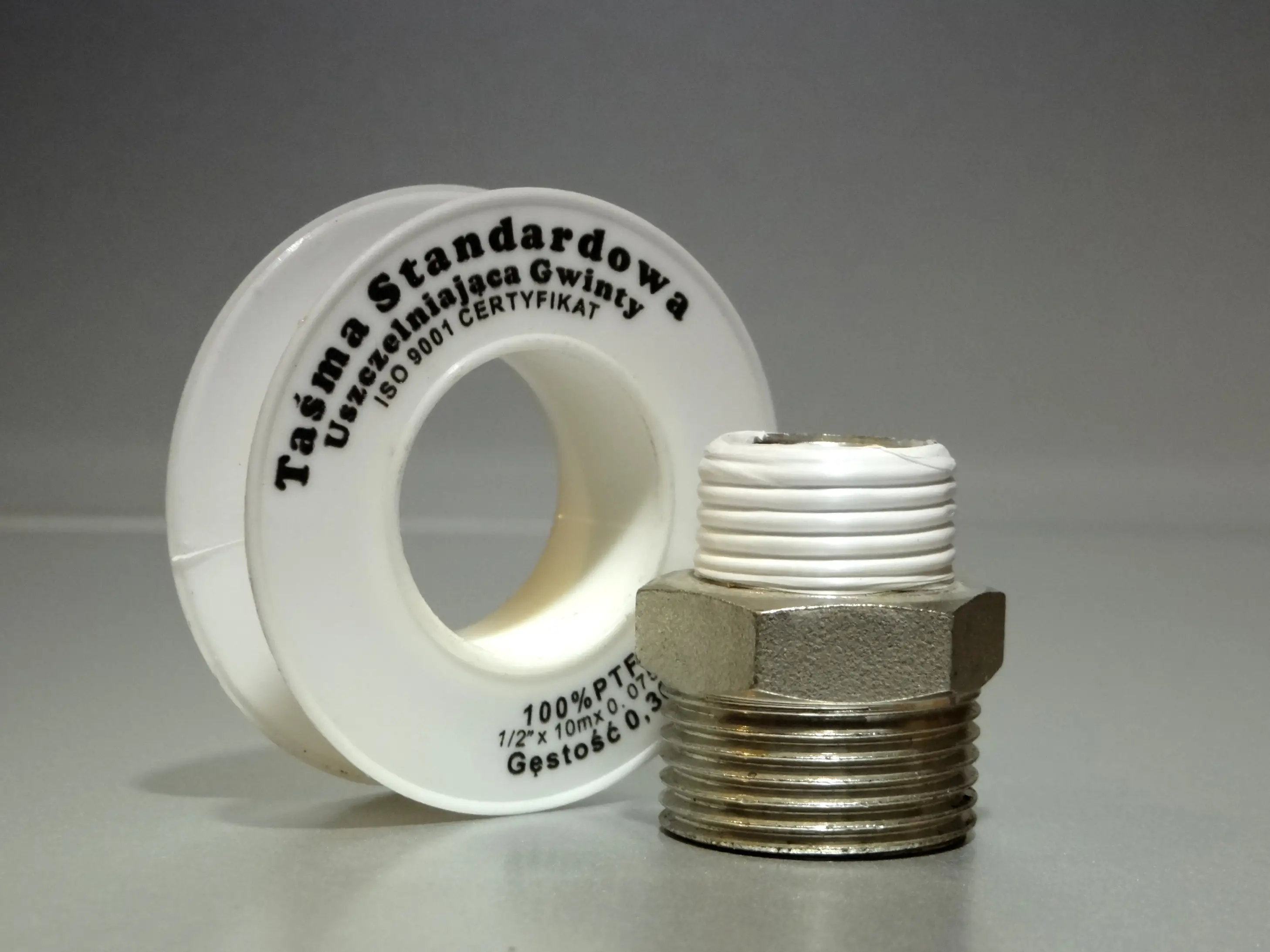
- NPT threaded fittings: back the fitting out, peel off the old tape or sealant, and re-wrap with fresh PTFE tape (2–3 wraps, clockwise so it doesn’t unwind as you tighten) or apply a thread sealant rated for air. Then snug it down.
- Push-to-connect fittings: do NOT use tape on the push-in side — the O-ring does the sealing. Just re-cut the tube square and push it fully into the collet.
- Drain cock: close it fully; if it still seeps, swap in a new one with sealant on the threads.
- O-ring couplers: a cheap O-ring kit or a new coupler fixes a weeping quick-connect.
- Solenoid / check valve: replace the part — these aren’t worth rebuilding.
A note on tightening: more torque is not always more seal. NPT threads seal on the taper, and crushing a brass fitting can crack it or distort the seat. Tighten until snug plus a turn or two, then test. If it still leaks, it’s the sealant or the part, not the tightness.
Stop Leaks Before They Start
The systems that never leak are the ones that get drained and checked. Moisture is the quiet killer — water pools in the tank, rusts the drain and ports from the inside, and even migrates up to the horn diaphragms where it causes squeaks and pitch changes. Draining the tank after every heavy-use day or at least monthly keeps corrosion from ever opening a leak path. For more on how moisture and component wear shorten a system’s life, see how long air horns last.
- Drain the tank regularly to keep moisture and rust out of fittings
- Re-check fittings a week after any install — vibration finds the loose ones
- Keep cut-off pressure within the system’s rating so the blow-off valve never weeps
- Inspect air lines for kinks, abrasion, and heat damage near the engine
Dialing in the right cut-on and cut-off settings also keeps the compressor from short-cycling on a system that’s technically sealed. If you’re unsure what pressure your setup should run, our train horn PSI guide breaks down the numbers.
FAQ
Why does my air compressor run constantly even when I’m not using the horn?
Almost always a leak. A sealed tank holds pressure for days, so if the compressor keeps topping off, air is escaping — most often at a threaded fitting, the drain cock, or a weeping solenoid valve. Run the soapy water test to pinpoint it. A constantly running compressor overheats, so fix the leak rather than living with it.
My tank fills to about 50 PSI and stops. Is that a leak?
It can be a leak big enough that the compressor can’t outrun it, but it can also be a failing compressor or a stuck check valve. First do the soapy water test for an obvious leak. If nothing bubbles, check whether air blows back out of the compressor’s intake filter (bad compressor seal) and test the check valve.
Where do air leaks happen most often?
At connections, not solid metal. Threaded NPT fittings, the tank drain cock, push-to-connect couplers, the solenoid valve, and any unused open port top the list. Vibration and heat-cycling loosen them over time, which is why a week-later re-check after install pays off.
Can I use Teflon tape on push-to-connect fittings?
No. Push-to-connect (PTC) fittings seal with an internal O-ring on the smooth part of the tube, so tape does nothing there and shed bits can foul the seal. Tape and thread sealant are only for tapered NPT pipe threads. For PTC, just make sure the tube is cut square and pushed all the way in.
How do I know if my check valve is bad?
Blow through it by mouth: a good check valve lets air pass one direction and blocks it completely the other way. If air passes toward the compressor, it’s leaking back and needs replacement. A bad check valve often shows up as air blowing out of the compressor intake filter when the tank is pressurized.
Is a little hissing after the compressor shuts off normal?
A brief hiss as a pressure switch or unloader vents is normal on some setups, but a continuous hiss is not — that’s a leak draining your tank. If the gauge keeps dropping after the compressor stops, find the source with soapy water and reseal it.
Sources
- HornBlasters — Air Tank Not Filling Up: How to Diagnose and Fix — soapy water test, solenoid and check valve tests, compressor blowback diagnostics, unused-port plugging
- HornBlasters — Maintenance & Repair After Years of Use — leak detection, check valve over-torque, tank draining, moisture in diaphragms, pressure switch and compressor notes
- Quincy Compressor — How to Find and Fix Leaks in Your Air Compressor System — connectors, couplings, fittings, hoses, and tubes as common leak points
- Air Compressor Zone — Air Compressor Leaking Air: Where to Look and How to Fix It — drain valve leak causes, fitting and coupler leaks under vibration
- Train Horn Forums — Air Leakage discussion — real-world leak locations and diagnosis on hobbyist air horn systems
Keep reading
Frequently asked questions
Quick answers to the questions people ask most about this topic.
- Why does my air compressor run constantly even when I'm not using the horn?
- Almost always a leak, because a sealed tank holds pressure for days, so if the compressor keeps topping off then air is escaping. The usual spots are a threaded fitting, the drain cock, or a weeping solenoid valve, and you can pinpoint it with the soapy water test. Fix the leak rather than living with it, since a constantly running compressor overheats.
- How do I run the soapy water test to find an air leak?
- Mix a generous squirt of dish soap into a spray bottle of water, run the compressor up to full pressure, then cut power so vibration does not throw you off. Spray every connection, fitting, valve, weld seam, and port until it is dripping, and watch for bubbles, since even a pinhole leak will grow a foam blister. Windex works just as well if you have it on hand.
- Where do air leaks happen most often?
- At connections, not solid metal. Threaded NPT fittings, the tank drain cock, push-to-connect couplers, the solenoid valve, and any unused open port top the list, because vibration and heat-cycling loosen them over time. That is why a re-check a week after install pays off.
- Can I use Teflon tape on push-to-connect fittings?
- No. Push-to-connect fittings seal with an internal O-ring on the smooth part of the tube, so tape does nothing there and shed bits can foul the seal. Tape and thread sealant are only for tapered NPT pipe threads, while for push-to-connect you just make sure the tube is cut square and pushed all the way in.
- How do I know if my check valve is bad?
- Blow through it by mouth, since a good check valve lets air pass one direction and blocks it completely the other way. If air passes toward the compressor it is leaking back and needs replacement, and a bad check valve often shows up as air blowing out of the compressor intake filter when the tank is pressurized.
- Is a little hissing after the compressor shuts off normal?
- A brief hiss as a pressure switch or unloader vents is normal on some setups, but a continuous hiss is not, because that is a leak draining your tank. If the gauge keeps dropping after the compressor stops, find the source with soapy water and reseal it.
Related reviews & guides
Train Horn Check Valve: What It Does, How It Fails, How to Fix
Teflon Tape vs Pipe Dope for Train Horn Fittings: Which Seals Better?

Train Horn Compressor Intake Filter: Clean, Replace & Relocate It

Train Horn Wireless Remote Problems: Range, Pairing & Misfires
Train Horn Compressor Rebuild Kits: Rings, Pistons & When to Replace