How to Install a Train Horn on a Chevy Silverado (2014–2026)
Train horn install for Chevy Silverado — K2 (2014–2018), T1 (2019–2025) generations, mounting locations, OEM horn fuse-tap wiring, kit options, common issues.
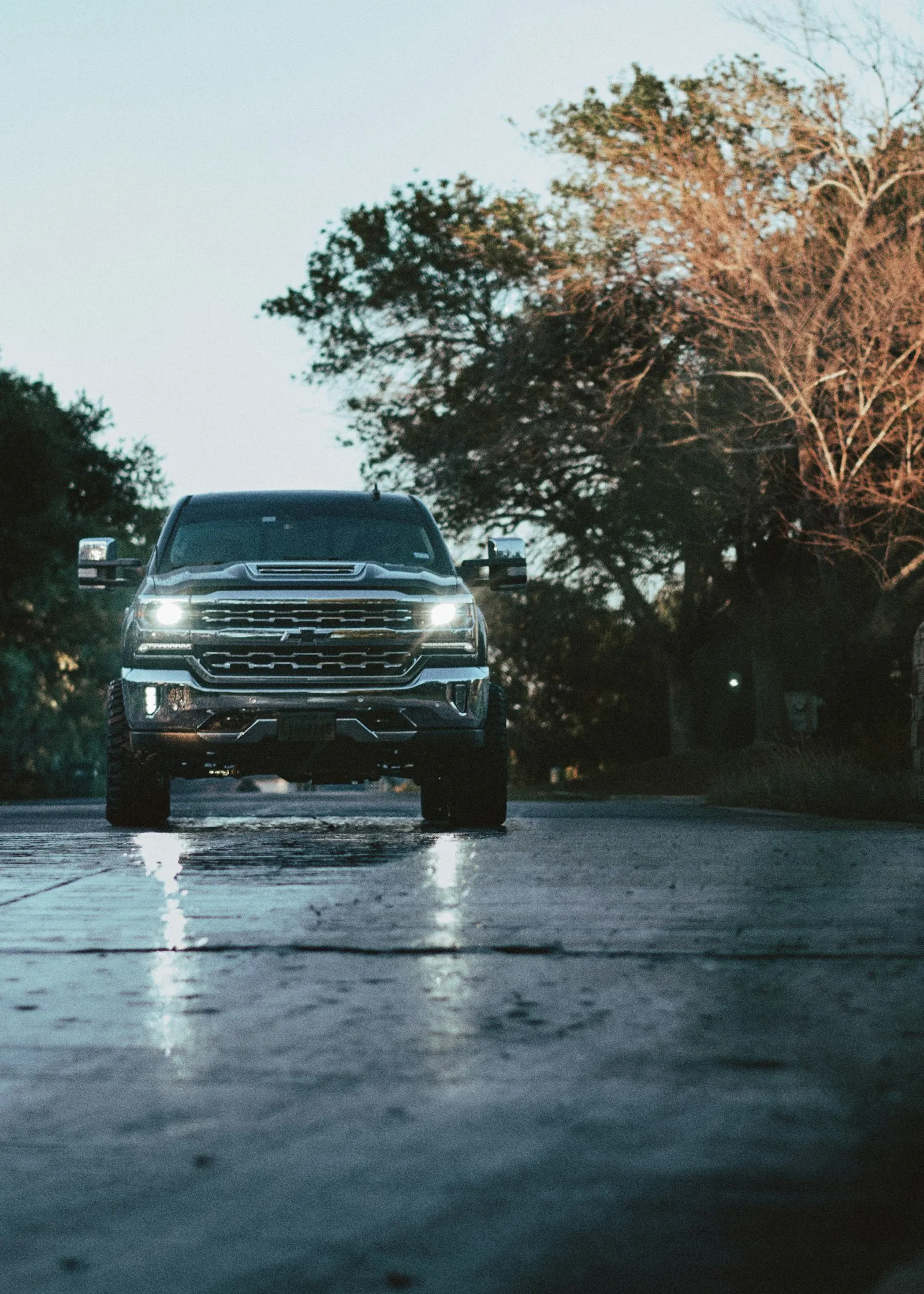
The Chevrolet Silverado 1500 is the third-most-installed truck for aftermarket train horns in the U.S., behind the Ford F-150 and the Ram 1500. Both major modern generations — K2 (2014–2018) and T1 (2019–2025, also 2024+ “T1XX” derivatives) — accept three solid mounting strategies: spare tire well, behind front bumper, or under-hood for compact kits. This guide consolidates HornBlasters’ year-specific OEM-tap pages, Kleinn’s direct-fit Lil’ Bad Ass 220 kit documentation, and discussions on Duramaxforum.com, GM-Trucks.com, and ChevroletForum.com.
- Difficulty
- Moderate
- Mechanical aptitude required
- Time
- 3–4 hr (kit-style)
- 6–8 hr if no direct-fit bracket
- Cost
- $1,000–$5,500
- Kit + mount + parts
- Best mount
- Spare tire well
- Or under-hood for compact kits
- Generations
- K2 / T1
- 2014–2018 / 2019–2026
- Air system
- 5-gal tank min
- 1NM-class compressor
Quick stats
- Difficulty: Moderate. You should be comfortable lowering the spare tire, accessing the engine bay fuse box, and tapping the OEM horn circuit.
- Time: 3–4 hours with a vehicle-specific direct-fit kit (Kleinn Lil’ Bad Ass 220); 6–8 hours with universal brackets and custom routing.
- Cost: $1,000 entry-level Vevor kit up to $5,500+ for a full HornBlasters Shocker XL or Nathan AirChime K5LA install.
- Tools: Standard 1/4″ and 3/8″ socket sets, drill, wire crimpers, multimeter, fuse puller, MICRO2 add-a-circuit adapter.
- Best mount option for most builds: Spare tire well using a universal spare-tire-delete bracket, or under-hood compact kit if you want to skip frame work entirely.
Mounting options by generation
K2 platform (2014–2018, including K2XX heavy-duty)
- Spare tire location (most common): Universal spare-tire-delete brackets fit. The OEM spare hangs below the bed on a winch cable; remove the spare and the winch mechanism, install the bracket, and the train horn slides into the same envelope.
- Behind front bumper: Some installers tuck dual or quad trumpets under the bumper with air chucks running back along the rocker panel.
- Old exhaust mount (creative): Per Duramaxforum.com discussions, some K2 builders use the old exhaust hanger mount on the frame to bracket the compressor. Saves drilling new holes.
Reference: HornBlasters’ 2001–2013 Chevy Silverado OEM horn wiring guide (the K2 fuse box layout closely follows the prior generation’s GMT900 platform).
T1 platform (2019–2026, including 2024+ HD)
- Direct-fit Kleinn Lil’ Bad Ass 220 kit: Kleinn sells a bolt-on direct-fit train horn + onboard air system for 2019–2024 GMC Sierra & Chevy Silverado 1500 — the easiest install path on the T1 platform.
- Spare tire well: Same approach as K2; T1 has slightly different bracket geometry.
- Under-hood compact (secondary battery location): Per GM-Trucks.com discussions, smaller kits like the Vixen VXO8805/3118 fit under the hood in the secondary battery tray location. Limits horn size to dual or quad trumpets but completely hides the install.
Reference installs: GM-Trucks.com 2019–2025 Train Horns thread, 2024 Denali HD Air Horn Install video.
Recommended kits
Three kits ordered by price tier:
- Kleinn Lil’ Bad Ass Model 220 — Direct-fit T1 platform kit (Kleinn product page). Pre-engineered to bolt directly to the T1 frame with no fabrication. Best entry option for 2019–2024 Silverado 1500 owners.
- HornBlasters Conductor’s Special 228H — $649.99–$749.99. 147.7 dB Shocker XL trumpets on a 2-gallon tank. Universal mounting with spare-tire-delete bracket.
- Nathan AirChime K5LA Kit — $4,999.99–$5,199.99. Real locomotive horn, 149.4 dB ceiling.
For portable / no-install alternatives see Milwaukee M18 and DeWalt 20V MAX hubs.
Step-by-step (kit + spare-tire-delete on a T1 Silverado 1500)
This sequence assumes a 2019–2026 Silverado 1500 with a universal spare-tire-delete bracket and a 5-gallon tank / single 1NM compressor air system. Adapt for K2 or under-hood compact kits. Total time: 3–4 hours.
- Disconnect battery negative terminal. Standard safety step.
- Lower the spare tire using the OEM winch crank (accessed through the rear bumper, behind the rear license plate).
- Remove the spare tire winch mechanism. Two 13 mm bolts on the crossmember. Save the hardware.
- Test-fit the bracket in the empty spare envelope. Mark any holes that need drilling.
- Drill marked holes and bolt the bracket to the frame rails. Torque to spec (≈ 30 ft-lb for 13 mm hardware).
- Mount the train horn to the bracket. Position trumpets pointing rearward, slightly down. Verify exhaust clearance.
- Mount the air tank using the included tank straps. Tank on its long axis, drain valve facing the ground.
- Mount the compressor on the bracket or alongside the tank. Cooling fins clear of tank and exhaust.
- Run air lines. 1/2” PTC compressor → tank in port; 1/2” PTC tank out port → solenoid valve → horn.
- Run the compressor power wire (8 AWG positive + ground) from the engine bay battery. Inline 30 A fuse within 12” of battery positive.
- Run the solenoid trigger wire (18 AWG) from the cab to the solenoid.
- Tap into the OEM horn fuse circuit (see “Wiring to the steering wheel button” below).
- Ground the solenoid to the vehicle frame on bare metal (paint stripped).
- Reconnect the battery, prime the system (compressor will run for ≈ 6 min 45 s to fill 5 gal from 0 → 150 PSI).
- Test fire the horn first by manually shorting the solenoid trigger to 12 V, then via the OEM steering wheel button.
Wiring to the steering wheel button
HornBlasters publishes year-specific guides for the Silverado fuse-tap procedure:
- 2001–2013 generation: HornBlasters guide for 2001–2013 Silverado.
- 2014 K2 onward: HornBlasters guide for 2014 Silverado — applies to most K2 variants.
The procedure is the same MICRO2 add-a-circuit pattern documented across the F-150 and Ram 1500 install pages:
- With battery still disconnected, locate the horn fuse in the engine bay fuse box. Reference the cover diagram for your year and trim.
- Remove the original horn fuse using a fuse puller.
- Insert a MICRO2 add-a-circuit adapter with the original fuse on the interior terminals.
- Insert a 10 A MICRO2 fuse into the adapter’s exterior terminals.
- Crimp 18 AWG wire to the adapter’s pigtail and route it to the train horn solenoid’s positive terminal.
- Ground the solenoid’s negative terminal to the vehicle frame.
- (Optional) Splice a cab-mounted toggle inline for “horn arm/disarm” override.
- Reconnect the battery, press the steering wheel horn button — both OEM horn and train horn fire together.
For the universal wiring topology including the compressor relay circuit, see /install/by-task/wiring-diagram/.
Common problems
Distilled from GM-Trucks.com, Duramaxforum.com, ChevyZR2.com, and ChevroletForum.com:
- MICRO2 adapter inserted backwards. Symptom: OEM horn doesn’t work after install. Fix: original fuse must be on the interior side of the adapter; new 10 A trigger fuse on the exterior side.
- Bracket fits with adaptation. Universal spare-tire-delete brackets often need extra drilling for the Silverado-specific frame holes. Test-fit before committing.
- Compressor near catalytic converter heat. T1 platform routes the catalyst close to the spare tire location. Heat-shield the compressor or relocate to the driver’s side frame rail.
- Reversed compressor polarity. Symptom: motor grinds, doesn’t pump. Fix: swap compressor +/− leads.
- Tank pressure drops fast on Conductor’s Special 228H. Normal — 2-gallon tank gives 3–5 sec blasts then 55 sec recovery. For longer blasts upgrade to 5-gallon tank.
- Air leak at NPT fittings. Use Teflon tape on every NPT thread; do not Teflon-tape PTC fittings (they O-ring seal).
- Vibration noise into cab. Use rubber-isolated mounts between compressor and frame bracket. GM-Trucks.com builders report success with thick rubber padding plus heavy-duty velcro.
Legal reminder
A train horn install on a Silverado 1500 is legal in most U.S. states for the horn hardware itself, but using it on a public road typically violates state vehicle codes (most cap horn output around 110 dB; FMVSS 141 caps replacement passenger-vehicle horns at 118 dB at 2 m forward). For state-by-state caps see the legal hub and state legality lookup.
Sources
- HornBlasters — Connecting Train Horns to OEM Horn (2014 Chevy Silverado) (K2 fuse-tap procedure)
- HornBlasters — Connecting Train Horns to OEM Horn (2001–2013 Chevy Silverado) (older fuse-tap reference)
- Kleinn — Lil’ Bad Ass Model 220 Direct-Fit Train Horn for 2019–2024 GMC Sierra & Chevrolet Silverado 1500 (T1 direct-fit kit)
- GM-Trucks.com — Train Horns 2019–2025 Silverado/Sierra discussion
- GM-Trucks.com — Kleinn Train Horn install on 2014–2018 Silverado/Sierra
- ChevroletForum — 2024 Denali HD Air Horn Install Video
- Duramaxforum — Train Horn Installation discussion
- Silverado ZR2 Forum — Train Horn Install discussion
We do not perform hands-on installs. This guide aggregates publicly available install documentation and community discussions. Verify all wiring against your vehicle’s year-specific service manual before powering up.