Train Horns for the RIDGID 18V Battery Platform
Portable train horns running on RIDGID 18V batteries: 130–150 dB across Dual, Quad, and Extreme configurations. Lifetime Service Agreement battery context.
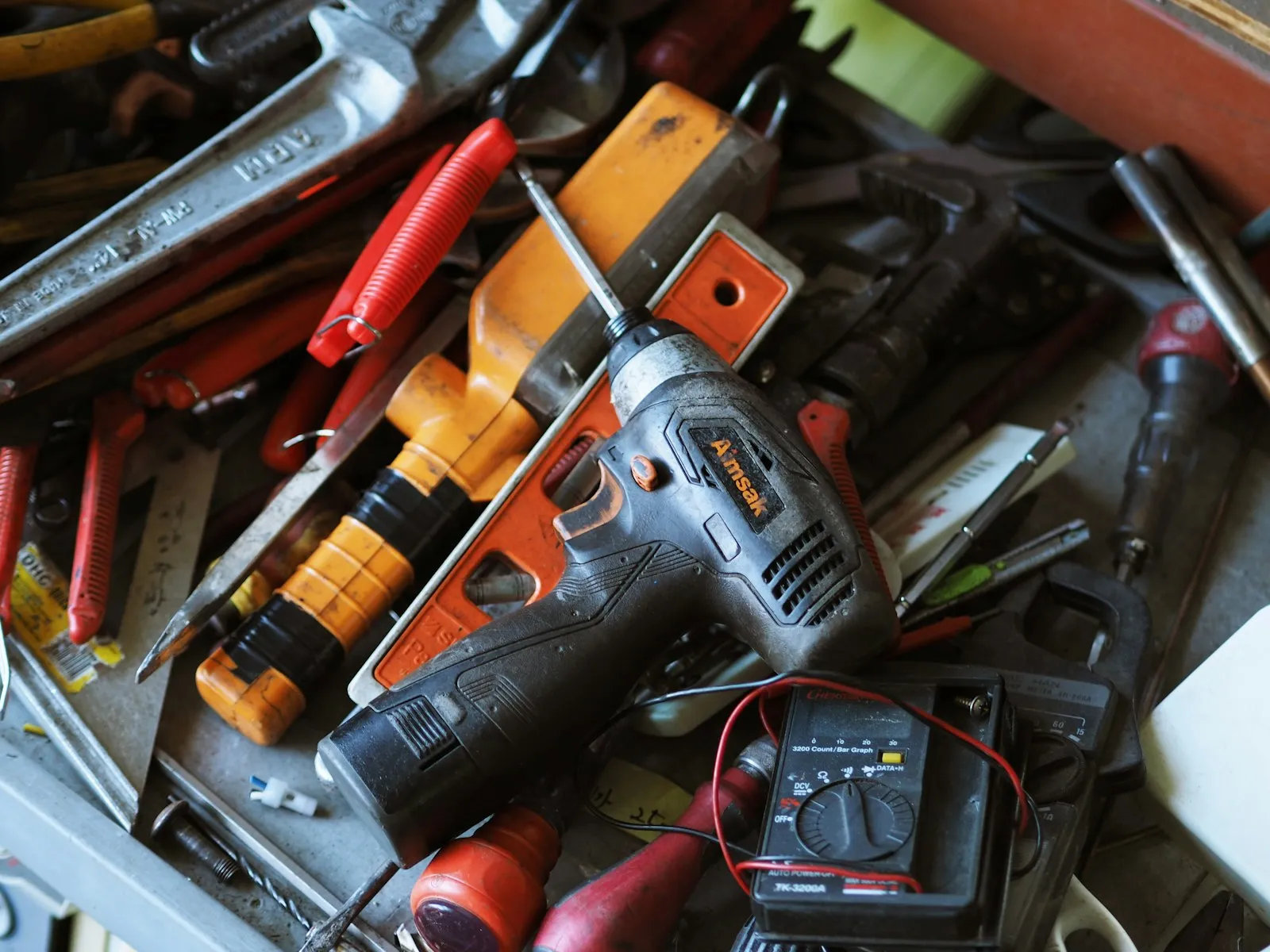
If you already own RIDGID® 18V tools, you have everything you need to power a portable train horn except the horn itself. The RIDGID 18V platform is 18 V nominal, ships in capacities from 1.5 Ah to 12.0 Ah, and uses one consistent battery interface across the entire range. BossHorn sells pre-built portable horn guns that accept a RIDGID 18V battery directly for power.
- Platform voltage
- 18 V nominal
- 5 series cells × 3.6 V
- Battery range
- 1.5–12.0 Ah
- Compact + Hyper Octane HP
- Horn output
- 130–150 dB
- Manufacturer-claimed at source
- Trumpets per kit
- 2 to 4
- Dual / Quad / Extreme
- Typical runtime
- 500+ blasts
- Short blasts on 6 Ah pack
- Remote range
- 160–2,000 ft
- Standard vs long-range option
Why RIDGID is the Home Depot pro pick for portable horns
RIDGID is Home Depot’s “pro” cordless brand, sitting between consumer-tier Ryobi (also HD-exclusive) and trade-tier Milwaukee. RIDGID 18V launched in 2003 and maintains backward compatibility across every battery and tool released since. The platform’s signature differentiator is the Lifetime Service Agreement (LSA) — RIDGID will repair or replace registered batteries and tools for life, including the cells, which is unique among major cordless platforms.
For a train horn’s intermittent compressor draw, that LSA is largely overkill — battery cells in a portable horn run cool and well within their continuous discharge spec, with little real-world cycle stress. But if you already own RIDGID batteries on the LSA, you’re effectively getting the horn’s power source covered indefinitely.
The result is a horn you can carry to a tailgate, a boat, a stadium, or a job site without permanent vehicle wiring or a 5-gallon air tank. Manufacturer-claimed output for portable horns running on RIDGID 18V batteries ranges from 130 dB (dual trumpet) to 150 dB (four-trumpet “Extreme”) at the source.
The 2026 Boss Series — flagship RIDGID-battery-powered line from BossHorn
BossHorn’s 2026 Boss Series is the only mass-market portable line currently available on the RIDGID 18V battery platform. Per the BossHorn Quad product page (source):
- Three-level volume control — soft (~110 dB), medium (~130 dB), full (130–150 dB depending on configuration).
- Patent-pending overheat protection — auto shut-off at 185 °F.
- Battery protection — auto-cutoff at 15 % charge to prevent deep discharge.
- Standard wireless remote — 433 MHz encrypted, 160 ft range.
- Long-range remote option — up to 2,000 ft, sold as a +$59 add-on.
- Splash-resistant housing.
- 1-year warranty + 90-day money-back guarantee on the horn itself (separate from RIDGID’s LSA on your battery).
Available kits that run on the RIDGID 18V battery
Three configurations sold for the RIDGID 18V platform. dB figures are manufacturer-claimed at the horn, not measured at 10 feet.
| Configuration | Source | Claimed dB | Trumpets | Price (USD) |
|---|---|---|---|---|
| Dual | BossHorn 2026 Boss Series | 130 | 2 (12” + 14”) | ≈ $185 |
| Quad | BossHorn 2026 Boss Series | 140 | 4 (14”/12”/8”/5”) | $210 |
| Extreme Series | BossHorn 2026 Boss Series | 150 | 4 long | ≈ $385 |
Pre-built kits arrive fully assembled with the compressor, manifold, trumpets, and a 433 MHz wireless remote already installed. Per the Quad product page, the unit weighs 4 lbs without battery, is splash-resistant, and is “Assembled in the USA.”
What’s typically in the box
Based on the BossHorn Quad listing:
- The fully assembled portable horn unit (compressor and manifold integrated)
- 4 aluminum alloy trumpets (sizes 1×14” + 1×12” + 1×8” + 1×5”)
- 1 standard wireless remote with 23A 12 V remote battery installed
- Optional add-ons: long-range 2,000 ft remote (+$59), RIDGID 18V battery and charger (sold separately)
- 1-year warranty, 90-day money-back return
Runtime: how many honks per charge
From the BossHorn Quad product page: 500+ short blasts or approximately 200 sustained 2-second blasts per fully charged 6.0 Ah-class RIDGID battery (source).
| Battery | Approx. short blasts | Approx. 2-sec sustained |
|---|---|---|
| 1.5 Ah | ~125 | ~50 |
| 2.0 Ah | ~165 | ~65 |
| 3.0 Ah Compact | ~250 | ~100 |
| 4.0 Ah | ~335 | ~135 |
| 6.0 Ah Hyper Octane HP | ~500 | ~200 |
| 9.0 Ah Hyper Octane HP | ~750 | ~300 |
| 12.0 Ah | ~1,000 | ~400 |
Real-world numbers will be lower in cold weather and on aging packs. The 2026 Boss Series ships with the 15 % low-voltage cutoff. Plug your specific Ah and expected blast pattern into the battery runtime calculator for a tighter estimate.
RIDGID vs Milwaukee M18 / DeWalt 20V — does the platform matter?
Functionally, no. All are 18 V nominal, all ship in 2.0–12.0 Ah pack sizes, and the trumpet hardware is identical across BossHorn’s brand-specific products. Reasons to choose RIDGID:
- Lifetime Service Agreement. Registered RIDGID batteries are covered for life including cell replacement.
- Home Depot exclusive. Easy in-store availability.
- Hyper Octane HP packs trend competitive with Milwaukee XC HO on cell quality.
Reasons to choose another platform:
- Tool count. RIDGID has fewer tools per platform (~80) vs Milwaukee M18’s 250+.
- Trade penetration. Milwaukee dominates electrician / plumber / mechanical trades; RIDGID is heavier in plumbing tool category specifically.
Cross-shop with the equivalent kits on the Milwaukee M18, DeWalt 20V MAX, Ryobi ONE+, and Makita LXT platforms — only the battery interface changes.
Choosing the right kit for the RIDGID 18V battery you already own
A simple decision tree based on use case:
- Tailgating, sports events, casual fun — Dual (130 dB) is loud enough and the cheapest entry.
- Off-road signaling, marine, large open spaces — Quad (140 dB) at $210 is the all-rounder.
- Maximum output — Extreme 4-long-trumpet at 150 dB (~$385).
Legality reminder
Just because you can carry a portable horn around easily doesn’t mean it’s legal to use everywhere. Most U.S. states allow private use; vehicle-mounted use on public roads is the area where citations are written. See the state legality lookup and our legal hub.
Frequently asked questions
Will the LSA cover my RIDGID battery if it fails while powering a portable horn?
Yes — RIDGID’s Lifetime Service Agreement covers registered batteries regardless of which compatible RIDGID-platform device they’re powering. Battery failure under normal use (compressor draw is well within RIDGID 18V cell spec) is covered. Document your serial numbers and keep them registered.
Will a 1.5 Ah RIDGID battery work in a portable horn?
Yes — any genuine RIDGID 18V battery fits. A 1.5 Ah will deliver roughly one-quarter the runtime of a 6.0 Ah, but it triggers and runs the compressor identically.
Are aftermarket RIDGID-compatible batteries safe with a portable horn?
Most pre-built portable horns advertise compatibility with both genuine RIDGID packs and aftermarket clones, per BossHorn product pages. Aftermarket packs vary widely in cell quality — and using an aftermarket pack voids RIDGID’s LSA on the host tool. For predictable performance, stick with genuine packs.
Can I damage my RIDGID battery using it on a portable horn?
In normal use, no. The compressor draw is well within the rated continuous discharge of even the smallest RIDGID packs. Risks come from extended deep discharge, which the 2026 Boss Series’ built-in 15 % low-voltage cutoff is designed to prevent.
How loud is “150 dB” really?
150 dB at the horn source drops with distance per the inverse-square law: roughly −6 dB per doubling of distance. At 10 feet you’d measure something closer to 130–135 dB; at 100 feet, around 110–115 dB. Use the decibel-distance calculator for a specific reading.
Sources
- BossHorn — Quad Train Horn for RIDGID® 18V Battery (140 dB, $210, 4 trumpets, runtime, 2026 Boss Series feature list)
Pricing and product availability verified April 28, 2026. Manufacturer-claimed decibel ratings have not been independently verified by Train Horn. We do not perform hands-on testing — see our methodology for how we source and aggregate data.