Train Horns for the Makita LXT 18V Battery Platform
Portable train horns running on Makita LXT 18V batteries: 130–150 dB across Dual, Quad, and Extreme configurations. Runtime, output, pricing for 2026.
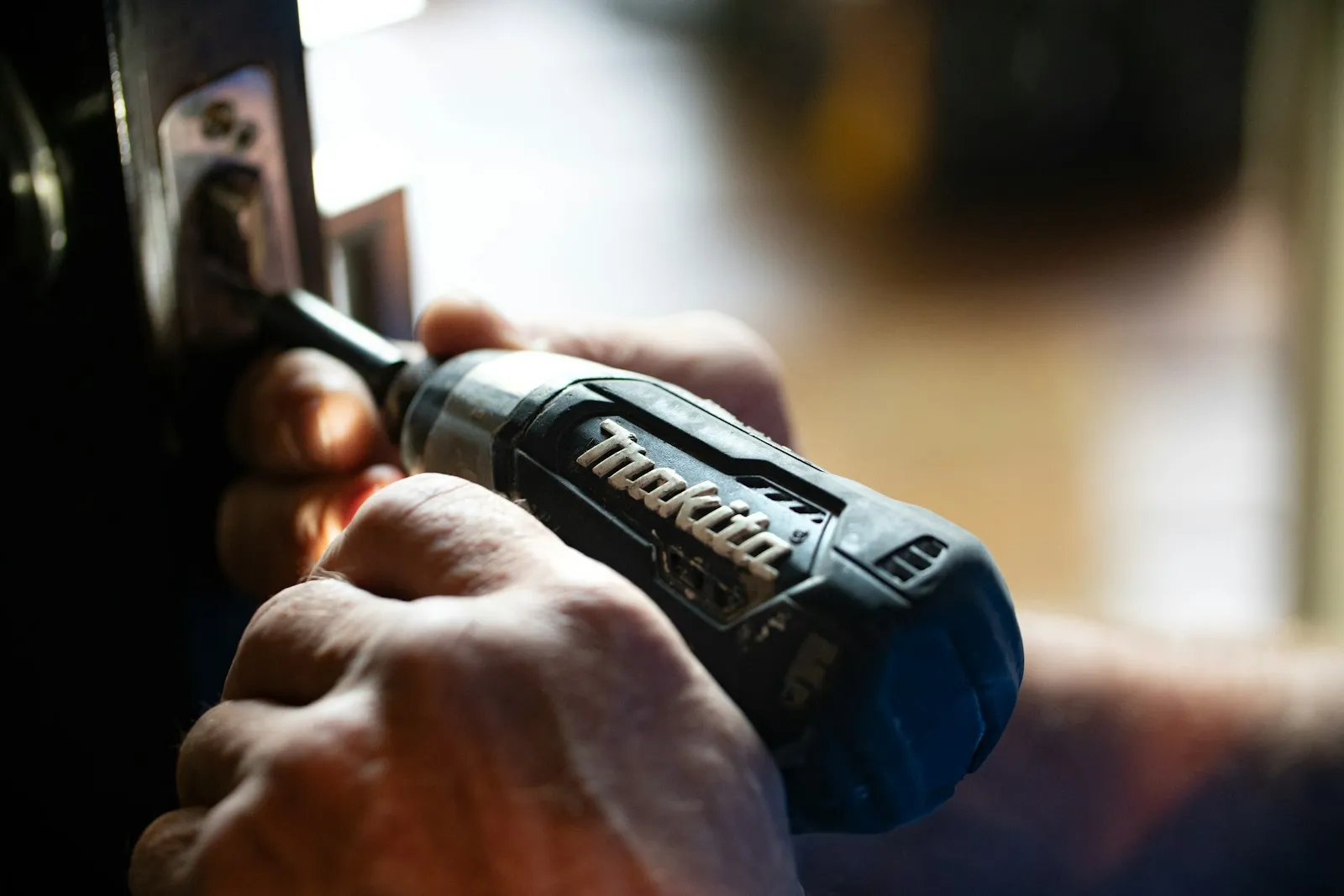
If you already own Makita® 18V LXT® tools, you have everything you need to power a portable train horn except the horn itself. The LXT platform is 18 V nominal, ships in capacities from 1.5 Ah to 6.0 Ah on Makita’s first-party packs, and uses one consistent battery interface across the entire range. Several manufacturers now sell pre-built portable horn guns that accept an LXT battery directly for power — no wiring harness, no air tank, no permanent vehicle install.
- Platform voltage
- 18 V nominal
- 5 series cells × 3.6 V
- Battery range
- 1.5–6.0 Ah OEM
- BL1815 to BL1860B (Star Protection)
- Horn output
- 130–150 dB
- Manufacturer-claimed at source
- Trumpets per kit
- 2 to 4
- Dual / Quad / Extreme
- Typical runtime
- 500+ blasts
- Short blasts on 6 Ah pack
- Remote range
- 160–2,000 ft
- Standard vs long-range option
Why Makita LXT is the trades pick for portable horns
Makita LXT is one of the longest-running 18V cordless platforms still in active production — Makita launched LXT in 2005 and has maintained backward compatibility across every battery and tool released since. In trades that lean Makita-first (carpentry, finish work, outdoor power equipment), it has the deepest installed base of any single brand at the high end of the build quality spectrum. Every LXT battery uses the same physical interface and the same Star Protection electronics, which means a 2026 BL1860B 6.0 Ah pack drives a 2008 LXT drill identically — and drives a portable train horn the same way (Makita Tools — BL1860B product page).
The Star Protection system (Makita’s marketing term for the BMS communicating with compatible tools) is what gates LXT batteries to officially-supported tools — packs are “compatible only with Star Protection tools, indicated by the Star Symbol™ and/or Yellow Battery Receiver under the tool” per Makita’s own product page. For a portable horn that’s a non-issue: the horn just sees the battery as an 18 V power source and pulls current within spec.
The result is a horn you can carry to a tailgate, a boat, a stadium, or a job site without permanent vehicle wiring or a 5-gallon air tank. The trade-off in raw power: a battery-fed onboard compressor cannot generate the sustained 150+ PSI of a true tank-fed kit, so peak dB is lower and trumpets are smaller. Manufacturer-claimed output for portable horns running on LXT batteries ranges from 130 dB (dual trumpet) to 150 dB (four-trumpet “Extreme”) at the source.
The Makita LXT 18V battery family
The first-party LXT lineup from Makita’s catalog (Makita BL1850B, 5.0 Ah; Makita BL1860B, 6.0 Ah):
| Pack | Model number | Charge time (Rapid Optimum) | Notes |
|---|---|---|---|
| 1.5 Ah | BL1815 | ~15 min | Lightest first-party LXT pack |
| 2.0 Ah | BL1820 | ~25 min | Standard compact |
| 3.0 Ah | BL1830 | ~30 min | General-purpose |
| 4.0 Ah | BL1840B | ~40 min | Higher runtime |
| 5.0 Ah | BL1850B | 45 min | Trade-standard pack |
| 6.0 Ah | BL1860B | 55 min | Largest first-party LXT pack; on-board LED charge indicator |
Aftermarket suppliers ship 8.0 Ah, 9.0 Ah, and 12.0 Ah replacements that are advertised as LXT-compatible, but Makita’s own first-party catalog tops out at 6.0 Ah. A portable horn will accept any of these. What changes is duration before the battery cuts out.
The Makita Rapid Optimum Charger uses a smart-charging algorithm that “communicates with the battery during the charging process to monitor current, voltage and temperature,” per Makita, which is why LXT charge times are notably faster than rivals at the same Ah.
The 2026 Boss Series — flagship LXT-battery-powered line from BossHorn
BossHorn’s 2026 Boss Series is the most feature-complete portable line currently available on the Makita LXT battery platform. The Extreme Series sold for the LXT platform carries the same protection circuitry and three-level volume control found on the M18 and 20V MAX flagship variants.
Per the BossHorn Dual, Quad, and Extreme product pages (Dual, Quad, collection):
- Three-level volume control — soft (~110 dB), medium (~130 dB), full (130–150 dB depending on configuration). Most older portable horns are single-volume on/off only.
- Patent-pending overheat protection — auto shut-off at 185 °F to prevent compressor damage during sustained use.
- Battery protection — auto-cutoff at 15 % charge to prevent deep discharge and cell damage on the LXT pack.
- Standard wireless remote — 433 MHz encrypted, 160 ft range.
- Long-range remote option — up to 2,000 ft, sold as a +$59 add-on.
- Splash-resistant housing — outdoor-grade, but not submersible.
- 1-year warranty + 90-day money-back guarantee — applies across the line.
The Boss Series umbrella covers everything BossHorn ships for LXT use in 2026: the three pre-built configurations described below, all with the same protection circuitry and remote system.
Available kits that run on the LXT battery
Three trumpet configurations are sold for the LXT platform. dB figures are manufacturer-claimed at the horn, not measured at 10 feet.
| Configuration | Source | Claimed dB | Trumpets | Price (USD) |
|---|---|---|---|---|
| Dual | BossHorn 2026 Boss Series | 130 | 2 (12” + 14”) | $185 |
| Quad | BossHorn 2026 Boss Series | 140 | 4 (14”/12”/8”/5”) | $250 |
| Extreme Series | BossHorn 2026 Boss Series | 150 | 4 long | $365 (sale from $430) |
All three arrive fully assembled with the compressor, manifold, trumpets, and a 433 MHz wireless remote already installed.
What’s typically in the box
Based on the BossHorn Dual listing — representative of the category:
- The fully assembled portable horn unit (compressor and manifold integrated)
- 1 standard wireless remote with 23A 12 V remote battery installed
- Optional add-ons at checkout: long-range 2,000 ft remote (≈ +$59), LXT battery and charger (sold separately)
- 1-year warranty, 90-day money-back return (BossHorn Dual product page)
The horn does not include the LXT battery itself unless you select that option at checkout — most buyers already own at least one LXT battery and prefer to skip the bundle.
Runtime: how many honks per charge
The most useful number for a portable horn is “blasts per battery.” Manufacturers quote it on the 6.0 Ah pack because it sits in the middle of the lineup. From the BossHorn Quad product page: 500+ short blasts or approximately 200 sustained 2-second blasts on a fully charged 6.0 Ah LXT battery (source).
Use the table below to scale that estimate to other Ah ratings. Multiplier = pack Ah ÷ 6.0:
| Battery | Approx. short blasts | Approx. 2-sec sustained |
|---|---|---|
| 1.5 Ah (BL1815) | ~125 | ~50 |
| 2.0 Ah (BL1820) | ~165 | ~65 |
| 3.0 Ah (BL1830) | ~250 | ~100 |
| 4.0 Ah (BL1840B) | ~335 | ~135 |
| 5.0 Ah (BL1850B) | ~415 | ~165 |
| 6.0 Ah (BL1860B) | ~500 | ~200 |
Real-world numbers will be lower in cold weather and on aging packs. The compressor stalls before the battery is fully empty — the 2026 Boss Series ships with the 15 % low-voltage cutoff to prevent deep discharge that would damage the cells. Plug your specific Ah and expected blast pattern into the battery runtime calculator for a tighter estimate.
How an LXT battery actually powers a train horn
A train horn needs compressed air at 100–150 PSI flowing through the trumpet. A vehicle-mounted air-tank kit stores that pressure in a tank fed by a 12 V compressor over several minutes, then releases it through a solenoid valve. A portable battery-powered kit has no tank: the onboard compressor runs only while you press the trigger, and the trumpet sounds only as long as the compressor can hold pressure.
That’s why portable units running on LXT batteries are limited to ~150 dB at the source, while full tank-fed kits like the HornBlasters Shocker XL reach 154–158 dB. The compressor inside a handheld portable unit is small enough to be battery-driven, which means lower CFM and a hard ceiling on sustained pressure. For a full physics breakdown, see How do train horns work? and Decibels explained.
The 18 V × 6.0 Ah pack stores 108 Wh. A typical onboard compressor in these kits draws 10–15 A while running, so a 2-second blast consumes roughly 0.07 Wh — well under 0.1 % of the pack’s energy. Most of the per-blast cost is in the inrush current that fires the compressor, not the run-time itself, which is why “500 short blasts” on a 6.0 Ah pack is a credible figure regardless of platform.
LXT vs Milwaukee M18 / DeWalt 20V / Ryobi ONE+ — does the platform matter?
Functionally, no. All four are 18 V nominal, all ship in 2.0–6.0 Ah pack sizes (12.0 Ah on the others, 6.0 Ah max on first-party LXT), and the trumpet hardware is identical across brands. The reasons to choose one over another:
- You already own batteries on one platform. This is the biggest factor — buying a horn that fits your existing batteries saves you $50–$100 per pack you’d otherwise need.
- Charge time. LXT first-party packs charge faster than rivals at the same Ah due to the Rapid Optimum Charger’s active monitoring (45 minutes for a 5.0 Ah BL1850B per Makita).
- Pack ceiling. First-party LXT tops out at 6.0 Ah; M18, 20V MAX, and ONE+ all offer 8.0 Ah and 12.0 Ah factory packs. If you want a single pack that runs the horn for hundreds of sustained blasts, the others have the headroom.
- Build quality reputation. LXT cells trend strongest on cycle life in trade use; the platform is widely viewed as the premium-tier choice.
Cross-shop with the equivalent kits on the Milwaukee M18, DeWalt 20V MAX, and Ryobi ONE+ platforms — the trumpet hardware is essentially identical across brands; only the battery interface changes.
Choosing the right kit for the LXT battery you already own
A simple decision tree based on use case:
- Tailgating, sports events, casual fun — Dual (130 dB) is loud enough and the cheapest entry point at $185. The 12”+14” trumpet pair has the best portability-to-volume ratio.
- Off-road signaling, marine, large open spaces — Quad (140 dB) projects further and has a deeper tone. Best all-rounder at $250.
- Maximum output, you’ll be heard from two blocks away — Extreme 4-long-trumpet at 150 dB at $365.
If you want the widest feature set — three volume levels, overheat and deep-discharge protection — the BossHorn 2026 Boss Series carries those across all pre-built configurations. Older portable units and most competitor kits ship single-volume only.
Legality reminder
Just because you can carry a portable horn around easily doesn’t mean it’s legal to use everywhere. Most U.S. states allow private use; vehicle-mounted use on public roads is the area where citations are written. See the state legality lookup and our legal hub before mounting one to a truck.
Frequently asked questions
Will a 1.5 Ah BL1815 LXT battery work in a portable horn?
Yes — any genuine or aftermarket LXT 18 V battery fits, including the smallest 1.5 Ah BL1815 compact pack. A 1.5 Ah will deliver roughly one-quarter the runtime of a 6.0 Ah, but it triggers and runs the compressor identically. Use it for short sessions where weight matters more than blast count.
Do I need a Star Protection battery, or will an older LXT pack work?
Both work. Older non-Star LXT packs (the original BL1830 generation before the BL1830B) physically fit and electrically deliver 18 V identically. Star Protection is communication between the BMS and the host tool — for a portable horn, the horn just pulls current within the pack’s spec and the Star electronics aren’t engaged.
Are aftermarket LXT batteries safe with a portable horn?
Most pre-built portable horns advertise compatibility with both genuine Makita packs and aftermarket clones, per BossHorn product pages. Aftermarket packs vary widely in cell quality and safety circuitry; for sustained-current applications the manufacturer’s name on the BMS matters more than the Ah label. Aftermarket 8.0 / 9.0 / 12.0 Ah LXT packs exist but are not first-party Makita products.
Can I damage my LXT battery using it on a portable horn?
In normal use, no. The compressor draw is well within the rated continuous discharge of even the smallest LXT packs. Risks come from extended deep discharge, which the 2026 Boss Series’ built-in 15 % low-voltage cutoff is designed to prevent.
How loud is “150 dB” really?
150 dB at the horn source drops with distance per the inverse-square law: roughly −6 dB per doubling of distance. At 10 feet you’d measure something closer to 130–135 dB; at 100 feet, around 110–115 dB. A 150 dB-source horn is still painfully loud well into the 150 ft range — see our decibel-distance calculator for a specific reading.
What does the 2026 Boss Series actually add over older portable units?
Three things: (1) three-level volume control instead of single-volume on/off, (2) patent-pending overheat protection at 185 °F to prevent compressor damage, and (3) 15 % low-voltage cutoff to protect the battery from deep discharge. Older or budget portable horns generally lack all three.
Is the wireless remote required?
The remote is the standard activation method for these kits. The 433 MHz encrypted remote works through a vehicle’s body and is rated 160 ft on the standard unit; the 2,000 ft long-range option is sold as a +$59 add-on on the BossHorn listings.
How does a portable horn on an LXT battery compare to a real Nathan K5LA?
It doesn’t, in the same way a Bluetooth speaker doesn’t compare to a stadium PA. A real K5LA on a locomotive runs on 100+ PSI from a continuous air system fed by a diesel-powered compressor; it produces a true 5-tone chord at ~146–148 dB at 100 ft. A portable battery-powered kit produces an approximation of that sound at ~120 dB at 100 ft and sounds for as long as the battery has charge. See our forthcoming Nathan K5LA review for a deep technical comparison.
Sources
- BossHorn — LXT-Battery-Compatible Collection (2026 Boss Series umbrella; lineup pricing)
- BossHorn — Dual for LXT Battery (130 dB, runtime, 185 °F overheat / 15 % battery cutoff, $185)
- BossHorn — Quad for LXT Battery (140 dB, 4 trumpets sized 14”/12”/8”/5”, $250)
- Makita — BL1850B 5.0 Ah Battery Product Page (45-min charge, Star Protection)
- Makita — BL1860B 6.0 Ah Battery Product Page (55-min charge, on-board LED indicator)
Pricing and product availability verified April 28, 2026. Manufacturer-claimed decibel ratings have not been independently verified by Train Horn. We do not perform hands-on testing — see our methodology for how we source and aggregate data.