Disclaimer. This page summarizes publicly available Alaska regulations as of April 2026 and is published for general informational purposes only. It is not legal advice, and nothing on this page creates an attorney–client relationship. Rules change, enforcement varies by jurisdiction (state, borough, municipality), and individual circumstances matter — always verify the current regulatory text and consult a licensed Alaska attorney before making installation or use decisions that may carry legal consequences.
- Legal status
- Legal
- Install permitted
- Regulation
- 13 AAC 04.210
- Alaska Admin Code
- Audibility required
- 200 ft
- Factory horn minimum
- Specific dB cap
- None
- Not "unreasonably loud"
- Siren ban?
- Yes
- Emergency vehicles exempt
- Penalty
- Civil fine
- Infraction per AS 28
Short answer
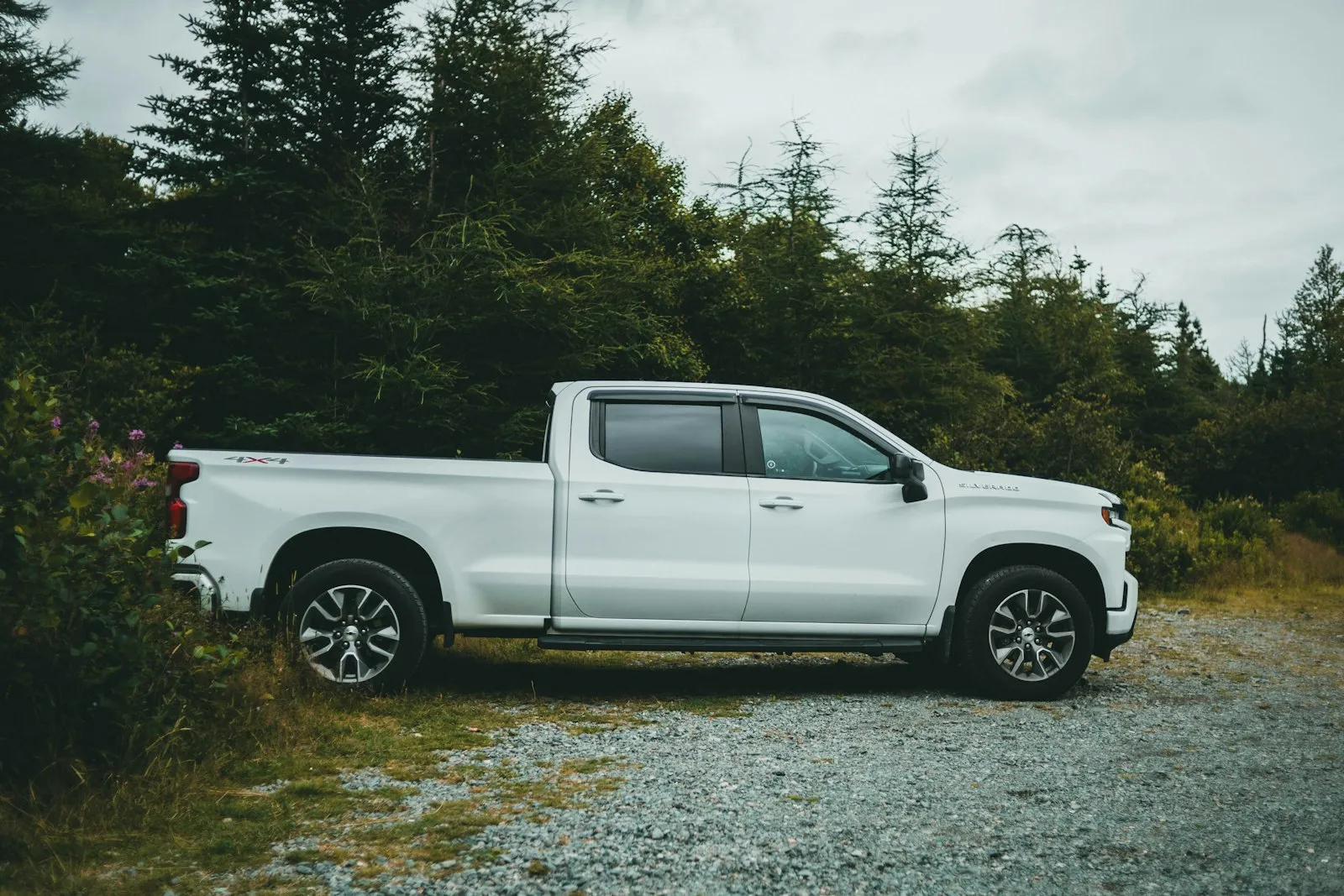
Installing a train horn on a private vehicle in Alaska is not prohibited. The state’s vehicle-horn rules live in the Alaska Administrative Code — 13 AAC 04.210 — rather than in the main statutes. The rule requires every motor vehicle to carry a horn audible at 200 feet, and separately prohibits any horn from emitting an “unreasonably loud or harsh sound” or a “whistle.”
Practically: you can install a train horn, but using it on a highway in a way an officer judges harsh or unreasonable can be cited.
What the regulation actually says
A motor vehicle operated upon a highway or other vehicular way or area, except for snowmobiles, must be equipped with a horn in good working order and capable of emitting sound audible under normal conditions from a distance of at least 200 feet, but no horn or other warning device may emit an unreasonably loud or harsh sound or a whistle. The driver of a motor vehicle shall, when reasonably necessary to insure safe operation, give audible warning with his horn, but may not otherwise use the horn when upon a highway or other vehicular way or area.
Operative rules pulled from the text:
- Every motor vehicle (except snowmobiles) must have a horn capable of emitting sound audible at 200 feet.
- No horn or warning device may emit an “unreasonably loud or harsh sound” or a “whistle.” The whistle prohibition is explicit.
- Horn use is limited to when “reasonably necessary to insure safe operation.” Recreational or gratuitous use is not permitted on a public way.
- Sirens, whistles, and bells are prohibited outside of emergency vehicles, which require a device audible at 500 feet.
- Theft-alarm exception — a horn / bell / whistle may be installed as a theft alarm if it cannot be triggered by the driver as a regular warning signal.
No specific decibel cap is set — loudness is judged against the “unreasonably loud or harsh” standard.
Does the original factory horn need to stay operational?
Yes. 13 AAC 04.210 requires every vehicle on an Alaskan highway to be equipped with a working horn audible at 200 feet. That’s independent of whether an additional horn is installed. Disconnecting the factory horn to rely on a train horn only puts the vehicle in violation of the equipment requirement — even though a train horn is far louder.
Keep the factory horn wired to its original button; add the train horn on a separate, clearly-marked switch. The two systems operate in parallel, not as substitutes.
Is a train horn a “whistle” or “siren” under 13 AAC 04.210?
Alaska’s rule explicitly bans “a whistle” as a warning device — that language is unusual and worth noting. The prohibition on sirens / bells / whistles is paired with an emergency-vehicle exception.
- ·Siren: continuous variable-pitch tone
- ·Whistle: single-tone air device (traditional steam/compressed-air type)
- ·Both listed in the explicit ban under 13 AAC 04.210
- ·Emergency-vehicle exception requires 500 ft audibility
- ·Discrete tuned chord rather than a single whistle tone
- ·Not a siren — no variable-pitch sweep
- ·Classification is not litigated in Alaska courts
- ·Use still falls under the "unreasonably loud or harsh" test
The practical read: a four-trumpet train horn is not a “whistle” in the regulatory sense — whistle language historically addresses single-pipe steam or pressure devices — but the “unreasonably loud or harsh” clause is what an officer will actually apply at the roadside.
Portable / battery-powered train horns
13 AAC 04.210 regulates “a horn or other warning device” without distinguishing air-tank from battery-powered designs. A portable train horn — like those on the Milwaukee M18, DeWalt 20V, or Ryobi ONE+ platforms — is treated the same as a pneumatic kit:
- Not prohibited to possess or install.
- Subject to the “unreasonably loud or harsh” test if used on a public way.
- Cannot replace the factory horn for compliance with the 200-ft audibility requirement.
Alaska’s sparse population and long stretches of wilderness highway mean portable units are common on side-by-sides, snow machines (where 13 AAC 04.210 specifically exempts snowmobiles), and trail vehicles — where use outside of public highways is the practical pattern.
Enforcement in practice
Alaska is broadly permissive. Urban areas (Anchorage, Fairbanks, Juneau) may enforce against obviously harsh use; rural boroughs rarely do. Borough-specific noise ordinances can stack on top of the state rule — Anchorage’s code (§9.36.360) tracks the state language closely. Citations are usually written when:
- Horn use generates a pedestrian or neighbor complaint
- Use is observed in residential areas or at night
- A state trooper judges the sound harsh or clearly beyond ordinary horn function
Install alone, without observed misuse, is not typically enforced.
Practical compliance
- 01 Keep the factory horn wired and functional
The 200-ft audibility requirement under 13 AAC 04.210 applies independently of what else is installed.
- 02 Put the train horn on a separate dedicated switch
Clearly distinct from the factory horn button — ideally covered or keyed to prevent accidental triggering.
- 03 Don't use it as an everyday horn in traffic
The rule limits horn use to when 'reasonably necessary to insure safe operation.' Your factory horn is what fits that test.
- 04 Reserve use for off-highway / private land
Trails, properties, events, closed courses. Snowmobiles are exempt from 13 AAC 04.210, which matters if your usage is on sleds or off-road rigs.
- 05 Watch local borough noise ordinances
Anchorage (§9.36.360) tracks state language; some other boroughs layer additional restrictions on audio equipment.
- 06 Hearing protection when testing
140+ dB causes immediate damage at close range. Use our calculator to estimate real exposure at realistic distances.
Use the decibel distance calculator to see how loud your horn is at the distance of a bystander or neighbor — the inverse-square law means real exposure is always much lower than the sticker number.
How to verify this page
Alaska regulations can and do change. Before acting on anything here, verify the current version of 13 AAC 04.210 via the Alaska Legislature’s official Administrative Code portal and consult a licensed Alaska attorney for your specific situation. If you notice this page is out of date, please send a correction — we update within 48 hours when a cited source is provided.
Nearby states & related laws
All 50 states →Washington
Washington train horn law (RCW 46.37.380): vehicle horn rules, Seattle / Tacoma / Spokane enforcement, aftermarket horn regulations. Plain-English guide.
Oregon
Oregon train horn law (ORS §815.225): vehicle horn rules, Portland / Eugene enforcement, aftermarket horn regulations. Plain-English guide.
Montana
Montana train horn law (MCA §61-9-401): vehicle horn rules, Billings / Missoula enforcement, aftermarket horn regulations. Plain-English guide.
Idaho
Idaho Code §49-956 covers vehicle horns. Install is not prohibited; use is limited to safe operation and sound must not be harsh. Plain summary.
Continue on Train Horn
All 50 states
Full state-by-state legality index with statuses, citations, and decibel caps where defined.
Decibel distance calculator
Inverse-square-law tool that shows perceived loudness at any distance from the horn.
Battery-powered platforms
Horns organized by cordless-tool battery — Milwaukee M18, DeWalt 20V, Ryobi, Makita.
HornBlasters Shocker XL review
154 dB four-trumpet flagship kit — measured output, install notes, and verdict.
Sources & Citations
- [1] Alaska DMV — official state portal
- [2] Alaska Administrative Code Title 13 — Public Safety
- [3] 13 AAC 04.210 — Horns and warning devices (Cornell LII secondary)
Educational content. Not legal advice. Verify current statutes with your state DMV or a licensed attorney before installation.