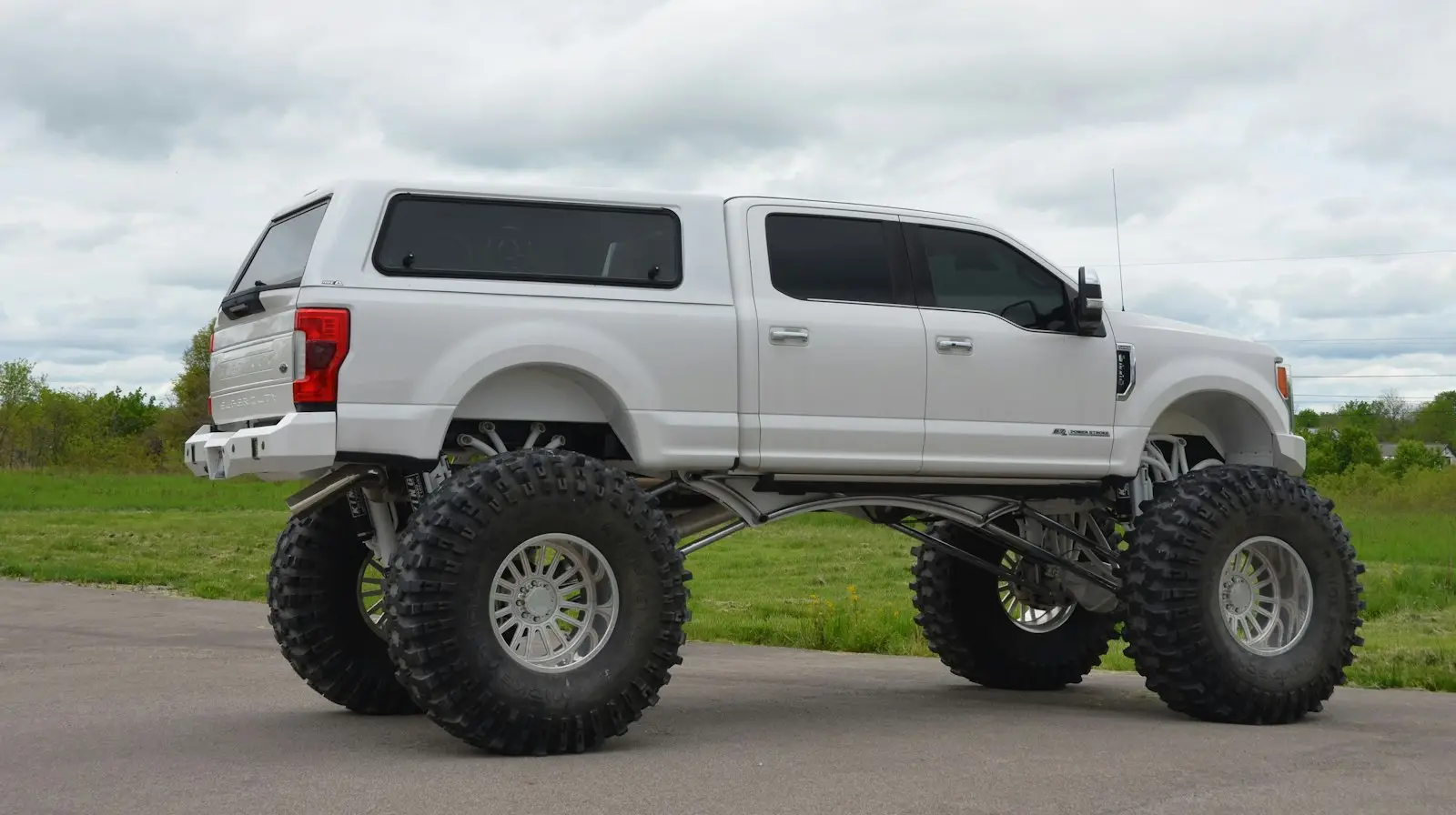
Train Horn Legal in Canada? Border & Ontario Rules for US Drivers
Driving a US truck with a train horn into Canada? What the border checks, what Ontario's Highway Traffic Act s. 75 bans, and what a horn ticket costs in Ontario.

Planning a run to Toronto, Niagara Falls, or a job site in Ontario with a train horn bolted to your US truck? Here is what the border, Canadian federal rules, and Ontario’s Highway Traffic Act actually say about bringing a train horn into Canada, and where the real risk sits.
The short answer
Crossing the border with a horn-equipped truck is not the hard part. Canada does not make a visiting US vehicle meet Canadian equipment standards, and we found no federal rule aimed at horns on a visitor’s personal vehicle. What matters is how you use the horn once you are on Ontario roads. Ontario’s rule is about noise, not hardware. Blow it hard enough to be “unreasonable” and you are looking at a provincial ticket. Use it like a normal horn and the law does not care how many trumpets you run.
- At the border: your truck enters as a visitor’s personal vehicle and does not have to meet Canadian standards.
- In Ontario: Highway Traffic Act section 75(4) bans sounding any horn “so as to make an unreasonable noise.”
- The ticket: the set fine for “unreasonable noise — signalling device” is $85.00.
- In town: city noise bylaws, such as Toronto’s, add their own rules for parked vehicles.
At the border: what Canada checks on a visitor’s truck
For a US resident driving their own vehicle into Canada, two federal agencies matter.
Transport Canada (vehicle standards). Transport Canada’s page on temporarily importing vehicles is clear: a visitor’s vehicle “doesn’t have to meet Canadian standards,” as long as it is only for your own use and is not sold or otherwise disposed of in Canada. That is the key point for horn owners. Canada’s motor vehicle safety standards apply to vehicles being imported for good, not to a US pickup visiting for a week. Your aftermarket horn kit doesn’t make the truck inadmissible.
CBSA (customs). The Canada Border Services Agency handles visitor vehicles under tariff item 9803.00.00, which covers “conveyances and baggage temporarily imported by a person who is not a resident of Canada for use by that person in Canada.” Under CBSA Memorandum D2-1-1 (dated 04/28/2026), a visitor’s vehicle may stay until the earlier of the departure date you declare or 12 months after entry. The vehicle has to be for your personal use. It can’t be used by a Canadian resident or used to haul passengers or goods for pay.
Two practical notes:
- A horn already installed on the truck is part of the vehicle. D2-1-1 has no separate rule for it.
- If you’re carrying a boxed horn kit or spare compressor as cargo, report it. D2-1-1 says visitors must report the goods they bring, and goods brought in for commercial purposes, tools included, don’t count as personal baggage.
Semi drivers, take note. The visitor provision explicitly excludes moving goods for compensation. A US tractor hauling freight into Ontario falls under carrier rules, not the tourist route above. Check with your carrier’s compliance team on that side of things. The horn-use rules below still apply to you on Ontario roads.
Driving in Ontario as a US visitor: licence and plates
Before getting to the horn, make sure the basics are covered. Both come from Ontario’s Highway Traffic Act (HTA):
- Driver’s licence (s. 34)
- A US resident who is at least 16, has not lived in Ontario more than three months in a year, and is licensed at home doesn’t need an Ontario licence.
- Registration (s. 15(3))
- A vehicle owned by a resident of another country stays exempt from Ontario registration if the owner doesn’t live or do business in Ontario for more than three months a year, the vehicle is legally plated at home, and the home jurisdiction offers Ontario residents the same courtesy.
- Commercial vehicles
- Section 15(3) states that it “does not apply to commercial motor vehicles.”
In plain terms, a US tourist with home-state plates and a home-state licence is legal to drive in Ontario for a normal trip.
What Ontario law says about horns
Ontario’s horn rules sit in HTA section 75, under the heading “Noise, smoke, bells and horns.” Three subsections matter to a train horn owner.
Section 75(4): unreasonable noise. This is the one that gets people:
“A person having the control or charge of a motor vehicle shall not sound any bell, horn or other signalling device so as to make an unreasonable noise…”
The same subsection also bans letting “any unreasonable amount of smoke” escape and causing “unnecessary noise.” Notice what is missing. The text sets no decibel limit and doesn’t ban air horns or train horns by type. The test is how you use the horn, and “unreasonable” is left to the officer’s judgment and, if you fight the ticket, to a justice.
Section 75(5): you must have a working horn. Every motor vehicle “shall be equipped with an alarm bell, gong or horn, which shall be kept in good working order and sounded whenever it is reasonably necessary to notify pedestrians or others of its approach.” This is a good reason to keep your factory horn wired up. If your train horn runs off an air tank that is empty or a compressor that has frozen, the stock horn keeps you legal.
Section 75(6): no sirens. Only ambulances, fire and police vehicles, public utility emergency vehicles, and Ministry vehicles may be equipped with “a siren horn or a device producing a sound which so nearly resembles that produced by a siren horn as to deceive or confuse.” If your kit includes a PA/siren module, leave it disconnected in Ontario. Equipping the vehicle with one is the offence. Using it is not required.
For how this compares with US state rules, see our state-by-state guide to whether train horns are legal on cars. Ontario’s approach is much like the many US states that regulate horn use instead of horn equipment.
What a ticket costs in Ontario
The Ontario Court of Justice publishes the set fines for HTA offences in Schedule 43. The horn-related items all carry the same set fine:
| Schedule 43 item | HTA section | Set fine |
|---|---|---|
| 209. Unreasonable noise — signalling device | 75(4) | $85.00 |
| 211. Unnecessary noise | 75(4) | $85.00 |
| 212. No horn — motor vehicle | 75(5) | $85.00 |
| 215. Defective horn — motor vehicle | 75(5) | $85.00 |
| 218. Have a siren | 75(6) | $85.00 |
These are Canadian dollars. The set fine is what appears on a ticket you choose to pay, and it isn’t the ceiling. HTA section 214(1) sets a general penalty of $60 to $1,000 on conviction where no other penalty is specified, so a case that goes to court can cost more.
If you get stopped anyway, the steps in our guide to handling a train horn ticket mostly still apply: stay polite, don’t demonstrate the horn, and read the ticket for the exact section cited. The big difference is that this is an Ontario provincial offence, not a US state citation. Read the ticket’s instructions on how to pay or dispute it from outside Canada, and talk to an Ontario paralegal or lawyer before ignoring it.
City noise bylaws: Toronto as an example
Ontario cities layer their own noise bylaws on top of the HTA. Toronto Municipal Code Chapter 591 (Noise) is a good example. Section 591-2.5 covers motor vehicles:
- 591-2.5(A): no “unnecessary noise from a stationary motor vehicle that is persistent noise, such as the sounding of a horn … clearly audible at a point of reception.” Parked-and-honking at a tailgate or a hotel lot is exactly what this targets.
- 591-2.5(B): no audible sound from “repairing, rebuilding, modifying or testing of a vehicle” from 9 p.m. until 7 a.m. (until 9 a.m. on weekends and statutory holidays). Don’t bench-test your compressor in the hotel parking lot at night.
You may see dB numbers in that section: 92 dB(A) at idle and 96 dB(A) above idle. Those limits are measured at least 50 cm from the exhaust outlet. They’re an exhaust-noise rule, not a horn limit.
Ontario also gives the province the last word on vehicle noise on highways. HTA section 195(1) says a municipal bylaw provision regulating “noise, fumes or smoke created by the operation of motor vehicles on the highways” is deemed repealed if it conflicts with the Act. On the road, the HTA governs. In a parking lot or at your campsite, the city bylaw is what you’ll be measured against. Our guide to city noise ordinances and train horns explains how this two-layer system works in US cities, and the logic carries over.
A practical checklist before you cross
- Keep the stock horn working. Section 75(5) requires a working horn. Don’t let your only horn depend on air pressure.
- Disconnect any siren or PA tone. Section 75(6) bans siren-like devices on the vehicle itself, not just their use.
- Report boxed kits and spare parts at the booth. An installed horn is part of the truck, but cargo goods get declared.
- Treat the train horn as an emergency-only tool. “Unreasonable noise” under 75(4) is judged case by case, and no decibel figure protects you.
- No parked demos in town. Toronto-style bylaws target persistent horn noise from stationary vehicles.
- Know your home-state rules too. Ontario law stops applying at the border, and your own state’s horn law takes over when you return.
Keep reading
- Are train horns legal on cars? State-by-state quick reference
- Got a train horn ticket? Fix-it tickets, fines & what to do next
- Train horn decibel limits by city: noise ordinances explained
- Siren on a personal vehicle: what the laws say
- Train horns & car insurance: do you have to tell your insurer?
Sources
- Highway Traffic Act, R.S.O. 1990, c. H.8 — Ontario e-Laws — s. 15(3) non-resident registration exemption, s. 34(1) non-resident licensing exemption, s. 75(4)–(6) horn, noise and siren rules, s. 195(1) inconsistent municipal bylaws, s. 214(1) general penalty
- Highway Traffic Act — archived copy of the consolidated text (Wayback Machine, 12/31/2025) — verbatim text of the HTA sections quoted above (the e-Laws page renders only with JavaScript)
- Ontario Court of Justice — Set Fines, Schedule 43 (Highway Traffic Act) — $85.00 set fines for items 209, 211, 212, 215 and 218 under s. 75
- Transport Canada — Temporarily importing vehicles — visitor vehicles don’t have to meet Canadian standards, must be for own use, cannot be sold in Canada
- CBSA Memorandum D2-1-1 — Temporary Importation of Baggage and Conveyances by Non-residents — tariff item 9803.00.00, 12-month limit, personal-use conditions, no carriage of goods for compensation, reporting of goods, memorandum date 04/28/2026
- City of Toronto Municipal Code Chapter 591, Noise (PDF) — § 591-2.5(A)–(C) stationary vehicle horn noise, vehicle testing hours, 92/96 dB(A) exhaust limits
Frequently asked questions
Quick answers to the questions people ask most about this topic.
- Can I drive my US truck with a train horn into Canada?
- Yes. Transport Canada says a visitor's vehicle doesn't have to meet Canadian standards as long as it is for your own use and isn't sold in Canada, and an installed horn is simply part of the vehicle. The rules that matter are about how you use the horn once you are on provincial roads.
- Are train horns legal in Ontario?
- Ontario's Highway Traffic Act doesn't ban train horns by type or set a decibel limit for horns. Section 75(4) prohibits sounding any horn so as to make an unreasonable noise, and section 75(6) bans siren-like devices on non-emergency vehicles.
- How much is a ticket for an unreasonably loud horn in Ontario?
- The Ontario Court of Justice's Schedule 43 lists a set fine of $85.00 (Canadian) for 'unreasonable noise — signalling device' under HTA s. 75(4). If the case goes to court, the general penalty in s. 214(1) ranges from $60 to $1,000.
- Do I have to declare my train horn at the Canadian border?
- A horn installed on your vehicle is part of the vehicle, which enters under CBSA tariff item 9803.00.00 for visitors. A boxed horn kit or spare compressor carried as cargo is a good, so report it, as CBSA Memorandum D2-1-1 requires visitors to do for the goods they bring.
- Can I use my train horn in Toronto?
- Only sparingly and not while parked. Toronto Municipal Code § 591-2.5 bans persistent unnecessary horn noise from a stationary vehicle that is clearly audible at a point of reception, on top of the province-wide unreasonable-noise rule in HTA s. 75(4).
Related reviews & guides

Train Horn on a Leased Car: Lease Terms, Return Rules, Clean Installs
Train Horns on Motorcycles: What Fits, What's Legal & What Helps

Best Train Horn for a Boat: Marine Air Horns & USCG Sound Rules

Are Train Horns Legal on Cars? State-by-State Quick Reference

Best Train Horn for Sprinter & Ford Transit Vans: Fitment & Mounting